Addiction Commonality

Alcohol, Opiates, Fat and Sugar are all Addictive Substances: this blog is about that "addiction sameness".

Butter Pig Family

* A butter sculpture of a sow and her piglets

Thursday, January 5, 2012

Crystal Meth

This video is a compilation of pictures of a lady from before until after (over a few years) she was on crystal meth
License:
Standard YouTube License

Wednesday, January 4, 2012

Carl Jung


"His craving for alcohol was the equivalent on a low level of the spiritual thirst of our being for wholeness, the union with God.

The only right and legitimate way to such an experience is, that it happens to you in reality and it can only happen to you when you walk on a path, which leads you to higher understanding.  You might be led to that goal by an act of grace or through a personal and honest contact with friends, or through a higher education of the mind beyond the confines of mere rationalism."

--From a letter from C. G. Jung to Bill Wilson,
co-founder of Alcohol Anonymous


Trans Fats-Brain Damage Link Suggested By New Study On Nutrient Levels

Trans Fats-Brain Damage Link Suggested By New Study On Nutrient Levels:


Trans Fats-Brain Damage Link Suggested By New Study On Nutrient Levels

Oregon Brain Aging Study scientist, Dr. Gene Bowman looks at nutrient levels in experiment subjects' blood and finds out for himself what they have eaten in the last few weeks.

Bowman has published several studies that have demonstrated that blood levels of many nutrients are well correlated with a subject's diet over a period of about a year.

In his neurological research, he's focused on nutrients that are known to be found at relatively high levels in spinal fluid and brain tissue.

His latest study, "Nutrient biomarker patterns, cognitive function, and MRI measures of brain aging," published in the Dec. 28 issue of Neurology, found some striking patterns relating what people eat to how their brains function.

Bowman found that people with high plasma levels of B vitamins and vitamins D, E and C had more total brain volume and better overall cognitive functioning. Additionally, people with higher levels of marine Omega-3 fatty acids running through their bloodstreams were found to have better executive function.

Bowman was quick to note that the study was conducted using data from just 100 people, all elderly, all living in Oregon, and all Caucasian. And he stated these positive trends were relatively minor. The pattern was so striking that Bowman said it was worth taking seriously despite the size of the study.

Bowman said that the most striking correlation found in the study was that people with high levels of trans fats in their blood had significantly worse cognitive performance and less total brain volume. In other words, the study indicated that eating foods high in trans fats -- mostly junk food, like processed pastries and fatty red meats –- may cause brain damage.

 Message: Look at the ingredients; if there's vegetable shortening, partially hydrogenated anything... just put it down.  Ban all Junk Foods from your diet as a precaution.
  

'via Blog this'

Triticum Fever, by Dr. William Davis, author of Wheat Belly

Quick: Name a common food, consumed every day by most people, that:
• Increases overall calorie consumption by 400 calories per day
• Affects the human brain in much the same way as morphine
• Has a greater impact on blood sugar levels than a candy bar
• Is consumed at the rate of 133 pounds per person per year
• Has been associated with increased Type 1 Diabetes
• Increases both insulin resistance and leptin resistance, conditions that lead to obesity
• Is the only common food with its own mortality rate
If you guessed sugar or high-fructose corn syrup, you're on the right track, but, no, that's not the correct answer.
The true culprit: Triticum aestivum, or modern wheat.
Note that I said "modern" wheat, because I would argue that what we are being sold today in the form of whole grain bread, raisin bagels, blueberry muffins, pizza, ciabatta, bruschetta, and so on is not the same grain our grandparents grew up on. It's not even close.
Modern wheat is the altered offspring of thousands of genetic manipulations, crude and sometimes bizarre techniques that pre-date the age of genetic modification. The result: a high-yield, 2-foot tall "semi-dwarf" plant that no more resembles the wheat consumed by our ancestors than a chimpanzee (which shares 99% of the same genes that we do) resembles a human. I trust that you can tell the difference that 1% makes.
The obvious outward differences are accompanied by biochemical differences. The gluten proteins in modern wheat, for instance, differ from the gluten proteins found in wheat as recently as 1960. This likely explains why the incidence of celiac disease, the devastating intestinal condition caused by gluten, has quadrupled in the past 40 years. Furthermore, a whole range of inflammatory diseases, from rheumatoid arthritis to inflammatory bowel disease, are also on the rise. Humans haven't changed -- but the wheat we consume has changed considerably.
Wheat Bellies

You've heard of "beer bellies," the protuberant, sagging abdomen of someone who drinks beer to excess. That 

201110261359
You've heard of "beer bellies," the protuberant, sagging abdomen of someone who drinks beer to excess. That distinctive look is often attributed to alcohol consumption when in fact it's just as likely to be caused by the pretzels -- not just the beer -- you're downing after work. A wheat belly is a protuberant, sagging abdomen that develops when you overindulge in wheat products like crackers, breads, waffles, pancakes, breakfast cereals and pasta. Dimpled or smooth, hairy or hairless, tense or flaccid, wheat bellies come in as many shapes, colors, and sizes as there are humans. But millions of Americans have a wheat belly, and the underlying metabolic reasons for having one are all the same. Wheat contains a type of sugar calledamylopectin A that raises blood sugar in an extravagant fashion. Eating just two slices of whole wheat bread, can raise blood sugar more than two tablespoons of pure sugar. This leads to the accumulation of visceral fat on the body, the deep fat encircling organs that is a hotbed of inflammatory activity. Inflammation, in turn, leads to hypertension, heart disease, cancer, and other conditions.
Wheat-consuming people are fatter than those who don't eat wheat. Why? Among the changes introduced into this plant is a re-engineered form of the gliadin protein unique to wheat. Gliadin has been increased in quantity and changed in structure, such that it serves as a powerful appetite stimulant. When you eat wheat, you want more  wheat and in fact want more of everything else -- to the tune of 400 more calories per day. That's the equivalent of 41.7 pounds per year, an overwhelming potential weight gain that accumulates inexorably despite people's efforts to exercise longer and curtail other foods -- all the while blaming themselves for their lack of discipline and watching the scale climb higher and higher, and their bellies growing bigger and bigger.
All of which leads me to conclude that over-enthusiastic wheat consumption is not only one cause of obesity in this country, it is the leading cause of the obesity and diabetes crisis in the United States. It's a big part of the reason that reality shows like the Biggest Loserare never at a loss for contestants. It explains why modern athletes, like baseball players and golfers, are fatter than ever. Blame wheat when you are being crushed in your 2 x 2 airline seat by the 280-pound man occupying the seat next to yours.
Sure, sugary soft drinks and sedentary lifestyles add to the problem. But for the great majority of health conscious people who don't indulge in these obvious poor choices, the principal trigger for weight gain is wheat.
And wheat consumption is about more than just weight. There are also components of modern wheat that lead to diabetes, heart disease, neurologic impairment -- including dementia and incontinence -- and myriad skin conditions that range from acne to gangrene -- all buried in that innocent-looking bagel you had for breakfast.
Despite the potential downside of a diet so laden with wheat products, we continually bombarded with messages to eat more of this grain. The Department of Health and Human Services and the USDA, for instance, through their Dietary Guidelines for Americans, advocate a diet dominated by grains (the widest part of the Food Pyramid, the largest portion of the Food Plate). The American Dietetic Association, American Diabetes Association, American Heart Association, along with the Grain Foods Foundation, the Whole Grains Council, and assorted other agriculture and food industry trade groups all agree: Everyone should eat more healthy whole grains. This includes our children, who are being told to do such things as replace fast food with grains. These agencies were originally sidetracked by the "cut your fat and cholesterol" movement, which led to a wholesale embrace of all things carbohydrate, but especially "healthy whole grains." Unwittingly, they were advising increased consumption of this two-foot tall creation of the geneticists, high-yield semi-dwarf wheat.
This message to eat more "healthy whole grains" has, I believe, crippled Americans, triggering a helpless cycle of satiety and hunger, stimulating appetite by 400 calories per day and substantially contributing to the epidemic of obesity and diabetes. And, oh yes, adding to the double-digit-per-year revenue growth of the diabetes drug industry, not to mention increased revenues for drugs for hypertension, cholesterol, and arthritis.
It is therefore my contention that eliminating all wheat from the diet is a good idea not just for people with gluten sensitivity; it's a smart decision for everybody. I have experience in my heart disease prevention practice, as well as my online program for heart disease prevention and reversal, with several thousand people who have done just that and the results are nothing short of astounding. Weight loss of 30, 50, even 70 pounds or more within the first six months; reversal of diabetes and pre-diabetic conditions; relief from edema, sinus congestion, and asthma; disappearance of acid reflux, irritable bowel syndrome symptoms; increased energy, happier mood, better sleep. People feel better, look better, eat fewer calories, feel less hungry, are able to discontinue use of many medications -- just by eliminating one food from their diet -- ironically a food that they've been told to eat more of.
It is imperative that we break our reliance on wheat. It will require nothing less than an overthrow of conventional nutritional dogma. There will be battles fought to preserve the status quo; the wheat industry and its supporters will scream, yell, and claw to maintain their position, much as the tobacco industry and its lobbyists fought to maintain their hold on consumers.
If the health benefits of a wheat-free diet sound hard to believe, why not conduct your own little experiment and see for yourself: simply eliminate all things made of wheat for four weeks -- no bread, bagels, pizza, pretzels, rolls, donuts, breakfast cereals, pancakes, waffles, pasta, noodles, or processed foods containing wheat (and do be careful to read labels, as food manufacturers love to slip a little wheat gliadin into your food every chance they get to stimulate your appetite). That's a lot to cut out, true, but there's still plenty of real, nutrient-dense foods like vegetables, fruit, nuts, cheese and dairy products, meat, fish, soy foods, legumes, oils like olive oil, avocados, even dark chocolate that you can eat in their place. If after that 4-week period you discover new mental clarity, better sleep, relief from joint pain, happier intestines, and a looser waistband, you will have your answer.

WILLIAM DAVIS

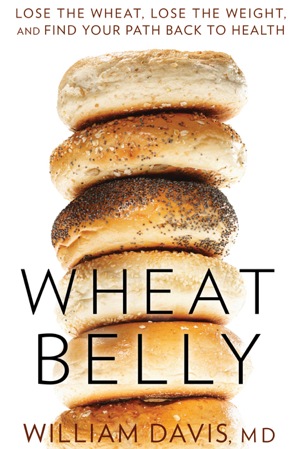
Dr. William Davis is author of the New York Times Bestseller, Wheat Belly: Lose the Wheat, Lose the Weight and Find your Path Back to Health (Rodale, 2011). You will find wheat-free discussions on his blog, and on Facebook and Twitter.


Wheat Belly | Lose the Wheat, Lose the Weight

"Man invented language to satisfy his deep need to complain" ~ Lily Tomlin


Wheat Belly | Lose the Wheat, Lose the Weight:

Have a happy wheat-free New Year!
Posted on December 31, 2011 by Dr. Davis


2011 marks the year when many people became acquainted with the astounding health and weight benefits of doing away with wheat. Had this message been followed by story after story of NOTHING happening, then it would have rightfully died on the vine within a few weeks.

Instead, stories of weight loss and health transformations continue to pour out each and every day, and the Wheat Belly movement continues to gain momentum. Though the book has now been on bookstore shelves for four months, the enthusiasm and number of success stories have not faltered–they have exploded.

I believe 2012 will mark the year when a critical mass of people will become acquainted with the notion that, not only is consumption of wheat and “healthy whole grains” not effective for health, they are the most destructive foods ever created, responsible for untold disease, suffering, and weight gain.

The situation with wheat reminds me of the Berlin Wall: After years of oppression and being told that the wall was there for the protection of East Berliners from capitalist and fascist regimes, the wall was torn down. We are tearing down the oppressive wall of “healthy whole grains.”

Here’s to a happy, healthy, slender, and wheat-free 2012!


Blog Roll:

Celiac Central

Discover Gluten Freedom Blog
Gluten Free for Good
Health and Nutrition by Dr. Michael R. Eades
Kelly the Kitchen Kop
Maria's Nutritious and Delicious Journal
Mark Sisson's Daily Apple
Raw Foods SOS: Troubleshooting on the Raw Foods Diet
Robb Wolf: Intermittent fasting, fitness, and gluten-free recipes
Simply . . . Gluten-free
Slow Burn Fitness
The Celiac Diva
The Gluten-free Girl and the Chef
The Paleo Diet Blog


....................................................................
On the evils of wheat

Dr. William Davis on why it is so addictive, and how shunning it will make you skinny
by Kate Fillion on Tuesday, September 20, 2011 9:40am - 216 Comments

Jean-Marc Giboux/Getty Images
William Davis, a preventive cardiologist who practises in Milwaukee, Wis., argues in his new book Wheat Belly that wheat is bad for your health—so bad that it should carry a surgeon general’s warning.

Q: You say the crux of the problem with wheat is that the stuff we eat today has been genetically altered. How is it different than the wheat our grandparents ate?

A: First of all, it looks different. If you held up a conventional wheat plant from 50 years ago against a modern, high-yield dwarf wheat plant, you would see that today’s plant is about 2½ feet shorter. It’s stockier, so it can support a much heavier seedbed, and it grows much faster. The great irony here is that the term “genetic modification” refers to the actual insertion or deletion of a gene, and that’s not what’s happened with wheat. Instead, the plant has been hybridized and crossbred to make it resistant to drought and fungi, and to vastly increase yield per acre. Agricultural geneticists have shown that wheat proteins undergo structural change with hybridization, and that the hybrid contains proteins that are found in neither parent plant. Now, it shouldn’t be the case that every single new agricultural hybrid has to be checked and tested, that would be absurd. But we’ve created thousands of what I call Frankengrains over the past 50 years, using pretty extreme techniques, and their safety for human consumption has never been tested or even questioned.


Q: What extreme techniques are you talking about?

A: New strains have been generated using what the wheat industry proudly insists are “traditional breeding techniques,” though they involve processes like gamma irradiation and toxins such as sodium azide. The poison control people will tell you that if someone accidentally ingests sodium azide, you shouldn’t try to resuscitate the person because you could die, too, giving CPR. This is a highly toxic chemical.

Q: Can’t you just get around any potential health concerns by buying products made with organically grown wheat?

A: No, because the actual wheat plant itself is the same. It’s almost as if we’ve put lipstick on this thing and called it organic and therefore good, when the truth is, it’s really hardly any better at all.

Q: A lot of us have switched to whole wheat products because we’ve been told complex carbohydrates are heart healthy and good for us. Are you saying that’s not true?

A: The research that indicates whole grains are healthy is all conducted the same way: white flour is replaced with whole wheat flour, which, no question, is better for you. But taking something bad and replacing it with something less bad is not the same as research that directly compares what happens to health and weight when you eliminate wheat altogether. There’s a presumption that consuming a whole bunch of the less bad thing must be good for you, and that’s just flawed logic. An analogy would be to say that filtered cigarettes are less bad for you than unfiltered cigarettes, and therefore, a whole bunch of filtered cigarettes is good for you. It makes no sense. But that is the rationale for increasing our consumption of whole grains, and that combined with the changes in wheat itself is a recipe for creating a lot of fat and unhealthy people.

Q: How does wheat make us fat, exactly?

A: It contains amylopectin A, which is more efficiently converted to blood sugar than just about any other carbohydrate, including table sugar. In fact, two slices of whole wheat bread increase blood sugar to a higher level than a candy bar does. And then, after about two hours, your blood sugar plunges and you get shaky, your brain feels foggy, you’re hungry. So let’s say you have an English muffin for breakfast. Two hours later you’re starving, so you have a handful of crackers, and then some potato chips, and your blood sugar rises again. That cycle of highs and lows just keeps going throughout the day, so you’re constantly feeling hungry and constantly eating. Dieticians have responded to this by advising that we graze throughout the day, which is just nonsense. If you eliminate wheat from your diet, you’re no longer hungry between meals because you’ve stopped that cycle. You’ve cut out the appetite stimulant, and consequently you lose weight very quickly. I’ve seen this with thousands of patients.

Q: But I’m not overweight and I exercise regularly. So why would eating whole wheat bread be bad for me?

A: You can trigger effects you don’t perceive. Small low-density lipoprotein [LDL] particles form when you’re eating lots of carbohydrates, and they are responsible for atherosclerotic plaque, which in turn triggers heart disease and stroke. So even if you’re a slender, vigorous, healthy person, you’re still triggering the formation of small LDL particles. And second, carbohydrates increase your blood sugars, which cause this process of glycation, that is, the glucose modification of proteins. If I glycate the proteins in my eyes, I get cataracts. If I glycate the cartilage of my knees and hips, I get arthritis. If I glycate small LDL, I’m more prone to atherosclerosis. So it’s a twofold effect. And if you don’t start out slender and keep eating that fair trade, organically grown whole wheat bread that sounds so healthy, you’re repeatedly triggering high blood sugars and are going to wind up with more visceral fat. This isn’t just what I call the wheat belly that you can see, flopping over your belt, but the fat around your internal organs. And as visceral fat accumulates, you risk responses like diabetes and heart disease.

Q: You seem to be saying that aside from anything else, wheat is essentially the single cause of the obesity epidemic.

A: I wouldn’t go so far as to say that all obesity is due to wheat. There are kids, of course, who drink Coca-Cola and sit in front of video games for many hours a day. But I’m speaking to the relatively health-minded people who think they’re doing the right thing by limiting fat consumption and eating more whole grains, and there’s a clear subset of people who are doing that and gaining weight and don’t understand why. It causes tremendous heartache. They come into my office and say, “I exercise five times a week, I’ve cut my fat intake, I watch portion size and eat my whole grains—but I’ve gone up three dress sizes.”

Q: You write that wheat is “addictive,” but does it really meet the criteria for addiction we’d use when talking about, say, drugs?

A: National Institutes of Health researchers showed that gluten-derived polypeptides can cross into the brain and bind to the brain’s opiate receptors. So you get this mild euphoria after eating a product made with whole wheat. You can block that effect [in lab animals] by administering the drug naloxone. This is the same drug that you’re given if you’re a heroin addict; it’s an opiate blocker. About three months ago, a drug company applied to the FDA to commercialize naltrexone, which is an oral equivalent to naloxone. And it works, apparently, it blocks the pleasurable feelings you get from eating wheat so people stop eating so much. In clinical trials, people lost about 22.4 lb. in the first six months. Why, if you’re not a drug addict, do you need something like that? And of course there’s another option, which is to cut wheat out of your diet. However, and this is another argument for classifying wheat as addictive, people can experience some pretty unpleasant withdrawal symptoms.

Q: For how long?

A: Generally about five days. And once you’re through withdrawal, your cravings subside, your calorie intake decreases and your alertness and overall health improve.

Q: So do you believe food manufacturers are putting wheat into more and more food products, not just bread and crackers, because it’s addictive and stimulates appetite?

A: These are not stupid people. The research showing that wheat stimulates appetite didn’t come from some little alternative health practitioner. It comes from the NIH. It stretches credibility to believe they have no awareness of the evidence.

Q: If there’s all this evidence, why does the government encourage us to “eat healthy” by upping our consumption of whole grains?

A: That’s the million-dollar question. Wheat is so linked to human habit, it’s 20 per cent of all calories consumed by humans worldwide, that I think there was the presumption, “Gee, humans have consumed this for thousands of years, so what’s the problem?” I don’t think the misguided advice to eat more whole grains came from evil intentions.

Q: Wheat is a huge industry. What do you say to all the farmers who grow it?

A: To me, it’s reminiscent of tobacco farmers, who would say, “Look, I’m just trying to make a living and feed my family.” Nevertheless, tobacco is incredibly harmful and kills people. It could turn out that if we wind back the clock 100 or 1,000 years, and resurrect einkorn or some of the heritage forms of wheat, maybe that would be a solution. Of course, wheat products would then be much more expensive. Instead of a $4 loaf of bread, maybe it would cost $7 when grown with a heritage wheat. To me, it’s similar to free range eggs or organic beef 20 years ago. Everyone said, “No one will pay a premium for those.” But people do. And when it comes to wheat, my main goal is to inform people, including farmers, that the prevailing notion that cutting fat and eating whole grains will make you healthy is not only wrong, it’s destructive.

Tags: Carbohydrates, Flour, Health, Heart Disease, Wheat, Wheat Belly, William Davis

......................................................................................................................................

Friday, December 30, 2011

Ten Common Addictions of Modern Man

Many people consider that an addiction must be physiological, but it has become very common these days to see the term used for anything which becomes obsessive. Thus one can become addicted to pornography, gaming, and all manner of unrelated (and definitely not physiological) things. This list looks at ten of the most common addictions of modern man.

10
Laziness

“It’s true hard work never killed anybody, but I figure, why take the chance?” — Ronald Reagan

9.
Sitting Down

“There must be more to life than sitting wondering if there is more to life” — Unknown

8.
Getting one's own way

“It’s MY way or the highway!” — Bill Parcells, Dallas Cowboys

7.
Trivia

“Summoned, one shuffles guiltily into the department of trivia.” — John Sutherland
6.
Amusement/Escapism

“Technology… the knack of so arranging the world that we don’t have to experience it.” — Max Frisch

5.
Idolization

“Let every man be respected as an individual and no man idolized.” — Albert Einstein

4.
Sex

“The trouble is not that players have sex the night before a game. It’s that they stay out all night looking for it.” — Casey Stengel

3.
Cool

“The world belongs to the enthusiast who keeps cool.” — William McFee

2.
Technology

“Technology makes it possible for people to gain control over everything, except over technology” — John Tudor

1.
Being Right

“Deep down, beneath all our insecurities, beneath all our hopes for and beliefs in equality, each of us

believes we’re better than anyone else.” — Audrey Beth Stein


BONUS:  The Internet

“In the absence of clearly-defined goals, we become strangely loyal to performing daily trivia until ultimately we become enslaved by it.” — Robert A. Heinlein

The Internet – what a wonderful source for us all – and you probably don’t need anyone to tell you that it’s quite addictive. The internet sums up all the addictions above in that it: takes the viewer to a wonderful escapist world where they get their own way by perusing endless trivia, gossip about their idols, search for online sex and cool technology, and they can ‘be right’ in endless anonymous chat rooms and blogs while they sit in their chair and laze the day away. Yes, it’s a wonderful way to exacerbate ones deepest addictions like no other product in the world. We love it.

Wednesday, December 28, 2011

Mexico's drug war: Deadlier than Afghanistan with no end in sight | News | National Post

Mexico's drug war: Deadlier than Afghanistan with no end in sight | News | National Post:

CIUDAD JUAREZ — In March, municipal police officers detained the two brothers of Armida Vazquez and whisked them away in patrol cars.

Vazquez and her mother searched for Dante and Juan Carlos, cellphone shop workers in their mid-20s, and checked with the local and federal police here, to no avail. Nineteen days later, the strangled bodies of the brothers were found on the outskirts of this notoriously violent city. Witness testimony and other evidence led to three policemen, now in jail awaiting trial.

But the police pushed back. Policemen in civilian clothes, Vazquez says, approached her mother outside church and told her to stop making trouble. When Vazquez made a statement against the suspects last month, she says other policemen and relatives of the officers threatened her outside the courthouse.
There were only 300 murders here in 2007, but when the violence arrived in early 2008 it rolled across the city with a vengeance. The government sent in 10,000 troops and federal police to try to quell the mayhem, but the deaths kept rising.

State officials counted 3,622 homicides in 2010, making Ciudad Juarez the city with the highest murder rate in the world at 272 per 100,000 residents. Authorities cite a drop in killings this year as a sign of success, but the murder rate is still more than six times higher than it was in 2007.


Source:
http://news.nationalpost.com/2011/12/27/ciudad-juarez-10000-killed-in-four-years-as-mexicos-toothless-war-on-drugs-goes-on/


'via Blog this'

Friday, December 9, 2011

Jon Hendricks-"Gimme that wine!" -Live at the Trident 1963 - YouTube

Jon Hendricks-"Gimme that wine!" -Live at the Trident 1963 - YouTube: ""

Uploaded by on Nov 30, 2010

One of singer Jon Hendricks' better post-Lambert, Hendricks & Ross recordings of the 1960s, this spirited live set has been reissued on CD by Polygram under the Smash subsidiary. Recorded in Sausalito, CA, with local musicians (the fine but obscure tenor Noel Jewkes, pianist Flip Nunez, bassist Fred Marshall, and drummer Jerry Granelli), the CD does an excellent job of summing up Hendricks' music of the era. He performs some hip bop ("Stockholm Sweetnin'"), revisits some of his previous group material ("Cloudburst" and "Shiny Stockings"), sings a couple of current tunes ("This Could Be the Start of Something Big" and "Watermelon Man"), performs a touching version of "Old Folks," breaks up the place with his humorous "Gimme That Wine," and revives the ancient ballad "I Wonder What's Become of Sally." Excellent music.

Buy here:
http://www.amazon.com/Recorded-Person-Trident-Jon-Hendricks/dp/B0000046JR

'via Blog this'

Wednesday, December 7, 2011

Dr. Dean Ornish: Healthy Eating During the Holidays

Statistic: Americans gain 1 to 1½ pounds annually during the holiday season
16 steps to healthy holiday eating: 

1. Eat something beforehand. If you don’t eat all day, you may arrive at holiday meals and parties ravenous and lose control.

2. Put 20 percent fewer high-calorie foods and 20 percent more fruits and vegetables on your plate. 
Studies show that you probably won’t notice the difference.

3. Eat the healthier foods first – they will fill you up somewhat, so you’ll be less likely to overeat the more indulgent foods.

4. Choose foods that leave evidence – e.g., keep the shrimp tails and chicken wing bones on your plate after you’ve eaten them. Studies show that if you have cues to see how much you’ve eaten, you’ll eat less.

5. Try not to put more than two or three items on your plate at one time. We eat more when food is in front of us.

6. Eat more slowly. The faster we eat, the more we eat. Sip water between bites. Holiday meals last longer than typical meals. If you wolf down your food, your plate may be clean while others are still eating, which will lead to seconds.

7. If you have a choice, use a smaller plate!

8. If you’re at someone’s home, try to serve yourself instead of allowing your relative to heap your plate full.

9. Arrive a little late and make a grand entrance. More of the indulgent foods will be gone by then.

10. If you go to a restaurant, ask your server not to put bread on the table beforehand. If it’s there, you’ll probably eat it. Leave more room for your favorite holiday foods instead.

11. Substitute cranberry sauce for gravy, which is usually high in fat and calories. Cranberry sauce is nutritious and loaded with antioxidants.

12. If you eat baked potatoes and yams, avoid toppings such as butter, cheese, bacon and sour cream. If possible, substitute low-fat yogurt or nonfat sour cream.

13. Watch the alcohol, which is high in calories and slows your metabolism. Also, too much alcohol can impair judgment, so the more you drink, the more you’re likely to eat.

14. Close your eyes and savor the food periodically during the meal. You’ll consume fewer calories and experience more pleasure.

15. Have just a few bites of dessert. The first and last bites are always the best, anyway.

16. Take a walk after dinner. You don’t have to hike five miles. A stroll around the block is a good start. Walking not only burns calories, it also helps relieve bloating and prevent heartburn.

For more information, and additional tips from Dr. Ornish on how to make healthy choices throughout the holiday season, visit www.marshealthyliving.com.


The Dr. Dean Ornish Heart Program reverses heart disease.

The program for Reversing Heart Disease focuses on alternatives besides surgery.

Folks met to learn about stress management, moderate aerobic exercise, nutrition and group support. The program has already enabled thousands to reduce their risk of heart complications.

It's a tough program you know, there's no beating around the bush. It's a hard program because you're asking people to make changes in their life, changes that, the way they've lived their life has lead them to the point where they now have heart disease or significant enough risk factors for heart disease.

http://www.wdtv.com/index.php/home/local-news/10592-program-is-offering-hope-to-heart-patients


The Dr. Dean Ornish Heart Program reverses heart disease.

The program for Reversing Heart Disease focuses on alternatives besides surgery.

Folks met to learn about stress management, moderate aerobic exercise, nutrition and group support. The program has already enabled thousands to reduce their risk of heart complications.

It's a tough program you know, there's no beating around the bush. It's a hard program because you're asking people to make changes in their life, changes that, the way they've lived their life has lead them to the point where they now have heart disease or significant enough risk factors for heart disease.

http://www.wdtv.com/index.php/home/local-news/10592-program-is-offering-hope-to-heart-patients

Blogger's Comments:
Get a head start on your New Year's Resolution to lose weight by not adding to the problem by over eating during the holiday season.


Remember the best exercise is pushing away from the table partially hungry.  Your stomach will soon tell you that you were, after all, full...


Sugar and Breakfast Cereals


Cereal offenders: How do we get the sugar out of breakfast? | Grist:

Photo: Chris Metcalf

Raise your hand if you serve your kids a bowl of Twinkies for breakfast. Or perhaps they prefer a few cookies instead? According to the Environmental Working Group's (EWG) new report on children's cereals, that's effectively what millions of kids are eating in the morning.

Indeed, the amount of sugar in many popular brands of cereals is astonishing: Kellogg's Honey Smacks is 56 percent sugar by weight. One cup of the stuff has more sugar than a Hostess Twinkie, says the report, while "a cup of any of 44 other children's cereals has more sugar than three Chips Ahoy! cookies."

EWG's 10 worst cereals, with Honey Smacks as No. 1, include:
Post Golden Crisp -- 51.9 percent sugar
Kellogg's Froot Loops Marshmallow -- 48.3 percent sugar
Quaker Oats Cap'n Crunch's OOPS! All Berries -- 46.9 percent sugar
Quaker Oats Cap'n Crunch Original -- 44.4 percent sugar
Quaker Oats Oh!s -- 44.4 percent sugar
Kellogg's Smorz -- 43.3 percent sugar
Kellogg's Apple Jacks -- 42.9 percent sugar
Quaker Oats Cap'n Crunch's Crunch Berries -- 42.3 percent sugar
Kellogg's Froot Loops Original -- 41.4 percent sugar

A while back, in a post called "In defense of candy," I observed that the problem with our food system isn't the obvious treats like candy; after all, "the typical American gets only 6 percent of their added sugar from candy." The real problem is the "candification" of our food system. And this report from EWG provides even more evidence. While many Grist readers probably don't serve their children sweetened breakfast cereal, millions of Americans do, and they are blitzed by billions of dollars in advertising telling them to do it. Somehow, reading a nutrition label and seeing that Honey Smacks has 20 grams (that's nearly five teaspoons) of sugar per serving does not have the same impact as slapping a label on the box that reads, "Warning: Equivalent to Eating a Twinkie."

EWG also notes that many children's cereals are high in sodium as well; sugar and salt are two of the Big Three ingredients (fat is the other) that food companies pour into their recipes to keep consumers eating after they're full.

So the question is: What to do about this? How can we stop...


Blogger suggestion 
-Vote with your wallet by avoiding high sugar added products as declared on the labels.


'via Blog this'

Tuesday, November 22, 2011

BPA levels jump after eating canned soup - Health - CBC News

BPA levels jump after eating canned soup - Health - CBC News: "Adults who ate canned soup daily showed a jump in levels of the plasticizer BPA in their urine, according to a small study.

The study of 75 people in Tuesday's issue of the Journal of the American Medical Association is one of the first to quantify BPA levels in humans after eating canned foods compared with eating freshly prepared ingredients.

Bisphenol A is an industrial chemical used to make polycarbonate plastic for water bottles and food containers as well as the protective lining in metal cans.

Previously, Health Canada focused on removing BPA from baby bottles to reduce exposure in newborns and infants. In August, Statistics Canada reported that more than 90 per cent of Canadians aged six to 79 had detectable levels of BPA in their urine.

The health risks of BPA in humans are unclear. Animal studies suggest that once ingested, BPA may imitate estrogen and other hormones..."


In the study, volunteers ate either canned soup or fresh soup daily for a week and then switched to the other type.


'via Blog this'