Addiction Commonality

Alcohol, Opiates, Fat and Sugar are all Addictive Substances: this blog is about that "addiction sameness".

Butter Pig Family

* A butter sculpture of a sow and her piglets

Wednesday, August 28, 2019

Our Food Is Killing Too Many of Us


Our Food Is Killing Too Many of Us

Improving American nutrition would make the biggest impact on our health care.


By Dariush Mozaffarian and Dan Glickman


Mr. Mozaffarian is dean of the Tufts Friedman School of Nutrition Science and Policy. Mr. Glickman was the secretary of agriculture from 1995 to 2001.


Published Aug. 26, 2019 Updated Aug. 27, 2019


Cheeseburgers at a White House picnic in 2018. 
CreditAlex Edelman/Getty Images


The Democratic debate on health care has to date centered around who should be covered and who should pay the bill. That debate, which has been going on for decades, has no clear answers and cannot be easily resolved because of two fundamental realities: Health care is expensive, and Americans are sick.

Americans benefit from highly trained personnel, remarkable facilities and access to the newest drugs and technologies. Unless we eliminate some of these benefits, our health care will remain costly. We can trim around the edges — for example, with changes in drug pricing, lower administrative costs, reductions in payments to hospitals and providers, and fewer defensive and unnecessary procedures. These actions may slow the rise in health care spending, but costs will keep rising as the population ages and technology advances.

And Americans are sick — much sicker than many realize. More than 100 million adults — almost half the entire adult population — have pre-diabetes or diabetes. Cardiovascular disease afflicts about 122 million people and causes roughly 840,000 deaths each year, or about 2,300 deaths each day. Three in four adults are overweight or obese. More Americans are sick, in other words, than are healthy.

Instead of debating who should pay for all this, no one is asking the far more simple and imperative question: What is making us so sick, and how can we reverse this so we need less health care? The answer is staring us in the face, on average three times a day: our food.


Poor diet is the leading cause of mortality in the United States, causing more than half a million deaths per year. Just 10 dietary factors are estimated to cause nearly 1,000 deaths every day from heart disease, stroke and diabetes alone. These conditions are dizzyingly expensive. Cardiovascular disease costs $351 billion annually in health care spending and lost productivity, while diabetes costs $327 billion annually. The total economic cost of obesity is estimated at $1.72 trillion per year, or 9.3 percent of gross domestic product.

These human and economic costs are leading drivers of ever-rising health care spending, strangled government budgets, diminished competitiveness of American business and reduced military readiness.


Fortunately, advances in nutrition science and policy now provide a road map for addressing this national nutrition crisis. The “Food Is Medicine” solutions are win-win, promoting better well-being, lower health care costs, greater sustainability, reduced disparities among population groups, improved economic competitiveness and greater national security.

Some simple, measurable improvements can be made in several health and related areas. For example, Medicare, Medicaid, private insurers and hospitals should include nutrition in any electronic health record; update medical training, licensing and continuing education guidelines to put an emphasis on nutrition; offer patient prescription programs for healthy produce; and, for the sickest patients, cover home-delivered, medically tailored meals. Just the last action, for example, can save a net $9,000 in health care costs per patient per year.


Taxes on sugary beverages and junk food would help lower health care costs. Credit Jenny Kane/Associated Press


Taxes on sugary beverages and junk food can be paired with subsidies on protective foods like fruits, nuts, vegetables, beans, plant oils, whole grains, yogurt and fish. Emphasizing protective foods represents an important positive message for the public and food industry that celebrates and rewards good nutrition. Levels of harmful additives like sodium, added sugar and trans fat can be lowered through voluntary industry targets or regulatory safety standards.

Nutrition standards in schools, which have improved the quality of school meals by 41 percent, should be strengthened; the national Fresh Fruit and Vegetable Program should be extended beyond elementary schools to middle and high schools; and school garden programs should be expanded. And the Supplemental Nutrition Assistance Program, which supports grocery purchases for nearly one in eight Americans, should be leveraged to help improve diet quality and health.

The private sector can also play a key role. Changes in shareholder criteria (e.g., B-Corps, in which a corporation can balance profit versus purpose with high social and environmental standards) and new investor coalitions should financially reward companies for tackling obesity, diabetes and other diet-related illness. Public-private partnerships should emphasize research and development on best agricultural and food-processing practices. All work sites should demand healthy food when negotiating with cafeteria vendors and include incentives for healthy eating in their wellness benefits.

Coordinated federal leadership and funding for research is also essential. This could include, for example, a new National Institute of Nutrition at the National Institutes of Health. Without such an effort, it could take many decades to understand and utilize exciting new areas, including related to food processing, the gut microbiome, allergies and autoimmune disorders, cancer, brain health, treatment of battlefield injuries and effects of nonnutritive sweeteners and personalized nutrition.

Government plays a crucial role. The significant impacts of the food system on well-being, health care spending, the economy and the environment — together with mounting public and industry awareness of these issues — have created an opportunity for government leaders to champion real solutions.

Yet with rare exceptions, the current presidential candidates are not being asked about these critical national issues. Every candidate should have a food platform, and every debate should explore these positions. A new emphasis on the problems and promise of nutrition to improve health and lower health care costs is long overdue for the presidential primary debates and should be prominent in the 2020 general election and the next administration.


Dariush Mozaffarian (@Dmozaffarian) is a cardiologist and dean of the Tufts Friedman School of Nutrition Science & Policy. Dan Glickman (@DanRGlickman) was the secretary of agriculture from 1995 to 2001.

The Times is committed to publishing a diversity of letters to the editor. We’d like to hear what you think about this or any of our articles. Here are some tips. And here’s our email: letters@nytimes.com.

Follow The New York Times Opinion section on Facebook, Twitter (@NYTopinion) and Instagram.


Tuesday, July 23, 2019

Meat-based Vegetables


image.png


What?! 


Sunday, July 7, 2019

How the chicken nugget became the true symbol of our era


    How the chicken nugget became the true symbol of our era 


This is what happens when you turn the natural world into a profit-making machine.


By Raj Patel and Jason W Moore

 Sat 18 Aug 2018


The most telling symbol of the modern era isn’t the automobile or the smartphone. It’s the chicken nugget. Chicken is already the most popular meat in the US, and is projected to be the planet’s favourite flesh by 2020. Future civilisations will find traces of humankind’s 50 billion bird-a-year habit in the fossil record, a marker for what we now call the Anthropocene. And yet responsibility for the dramatic change in our consumption lies not so much in general human activity, but capitalism. Although we’re taught to understand it as an economic system, capitalism doesn’t just organise hierarchies of human work. Capitalism is what happens when power and money combine to turn the natural world into a profit-making machine. Indeed, the way we understand nature owes a great deal to capitalism.


Every civilisation has had some rendering of the difference between “us” and “them”, but only under capitalism is there a boundary between “society” and “nature” – a violent and tightly policed border with deep roots in colonialism.

First taking shape in the era of Chistopher Columbus, capitalism created a peculiar binary order. “Nature” became the antonym of “society” in the minds of philosophers, in the policies of European empires, and the calculations of global financial centres. “Nature” was a place of profit, a vast frontier of free gifts waiting to be accepted by conquerors and capitalists.

This was a dangerous view of nature for all sorts of reasons, not least because it simultaneously degraded human and animal life of every kind. What we call “cheap nature” included not only forests and fields and streams, but also the vast majority of humankind. In the centuries between Columbus and the industrial revolution, enslaved and indentured Africans, Asians, indigenous peoples and virtually all women became part of “nature” – and treated cheaply as a result. When humans can be treated with such little care, it’s not surprising that other animals fare even worse under capitalism, especially the ones we end up paying to eat.


Animals have been at the centre of five centuries of dietary transformation, which sharply accelerated after the second world war. The creation of the modern world depended on the movement of cattle, sheep, horses, pigs and chickens into the new world, reinforcing the murderous advance of microbes, soldiers and bankers after 1492. Capitalism’s “ecological hoofprint”, to use food scholar Tony Weis’s well-turned phrase, has become radically globalised ever since. In the half-century after 1961, Weis tells us, per capita meat and egg consumption has doubled, and the number of slaughtered animals leapt eightfold, from eight to 64 billion.

To those with a romantic view of where their food comes from, uncooked meat appears to be a raw ingredient rather than a processed one. Quite the opposite. Feed and oilseed crops form part of what Weis terms “the industrial grain-oilseed-livestock complex”. Markets for grain made it possible for meat not just to become cheap food, but also to back financial instruments. Futures contracts in pork bellies, for instance, in turn require the uniformity, homogenisation and industrialisation of the crops they transform. Raw meat in the supermarket is, in other words, cooked up by a sophisticated and intensive arm of capitalism’s ecology.

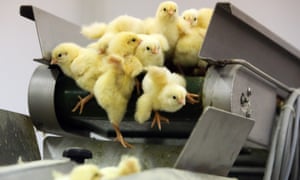
Where there’s profit, there’s every incentive to realise it efficiently. Modern meat-production systems can turn a fertile egg and a 4kg bag of feed into a 2kg chicken in five weeks. Turkey production times almost halved between 1970 and 2000, down to 20 weeks from egg to 16kg bird. Other animals have seen similar advances through a combination of breeding, concentrated feeding operations and global supply chains. The consequences of the sustained rise in meat consumption are a planetary affair too: 14.5% of all anthropogenic carbon dioxide (CO2) emissions are from livestock production.


The environmental consequences of meat production are, of course, external to industrial agriculture’s bottom line. Nature is merely the pool from which animals are drawn and factory farmed, and the dump into which their, and our, waste disappears. The danger lies in believing the division between nature and society is real, in seeing “factory farming” as an environmental question and “factory production” as a social question. Social questions are environmental questions, and vice versa.

Chickens don’t turn into nuggets by themselves. Capitalists need cheap work. With the European invasion of the new world in 1492, that labour presented itself in the bodies of indigenous people. By the late 16th century, when Spaniards were desperately trying to revive silver production at the great silver mountain of Potosí, in present-day Bolivia, they began using the word naturales to refer to indigenous people. Through hard work and prayer, those indigenous people, and enslaved Africans, might find divine redemption through work and perhaps even, one day long in the future, entry into society as equals.

Work was never meant to be fun. Consider the etymology of the French travail and the Spanish trabajo, each a translation of the English noun “work”: their Latin root is trepaliare, “to torture, to inflict suffering or agony.” But the way work works has changed.

For millennia, most humans survived through more or less intimate relations with land and sea. Even those who didn’t were closely connected to the tasks and objects of labour. Human survival depended on holistic, not fragmented, knowledge: fishers, nomads, farmers, healers, cooks and many others experienced and practised their work in a way directly connected to the web of life. Farmers, for instance, had to know soils, weather patterns, seeds – in short, everything from planting to harvest. That didn’t mean work was pleasant – slaves were often treated brutally. Nor did it mean that the relations of work were equitable: guild masters exploited journeymen, lords exploited serfs, men exploited women, the old exploited the young. But work was premised on a holistic sense of production and a connection to wider worlds of life and community.

In the 16th century, that began to shift. The enterprising Dutch or English farmer – and the Madeiran, then Brazilian, sugar planter – was increasingly connected to growing international markets for processed goods, and correspondingly more interested in the relationship between work time and the harvest. International markets pushed local transformations. Land in England was consolidated though enclosure, which concurrently “freed” a growing share of the rural population from the commons that they had tended, supported and survived on. These newly displaced peasants were free to find other work, and free to starve or face imprisonment if they failed. 

This history is alive and well in the modern chicken nugget. Poultry workers are paid very little: in the US, two cents for every dollar spent on a fast-food chicken goes to poultry workers. It’s hard to find staff when, according to one study in Alabama, 86% of employees who cut wings are in pain because of the repetitive hacking and twisting on the line. To fill the gaps in the labour force, some chicken operators use prison labour, paid at 25 cents an hour. In Oklahoma, chicken company executives returned to a colonial fusion of work and faith, setting up an addiction treatment centre in 2007, Christian Alcoholics & Addicts in Recovery. With judges steering addicts to treatment instead of jail, the recovery programme had a ready supply of workers. At CAAIR, prayer was supplemented with unpaid work on chicken productionlines as part of a recovery therapy. If you worked and prayed hard enough for the duration of your treatment, you’d be allowed to re-enter society.
Photograph: Bloomberg/Getty

CAAIR’s recruits were predominantly young and white, but the majority of poultry workers are people of colour. Latinx immigrants are a vital force in US agriculture, and the delivery of their cheap work was made possible by class restructuring on two fronts. One, in the US, was a strong movement in the 1980s by newly aggressive meat-packing firms to destroy union power and replace unionised workers with low-wage immigrant labour. The other was the destabilisation of Mexico’s agrarian order after 1994 by the North American Free Trade Agreement (Nafta), which resulted in flows of cheap immigrant labour – unemployed workers displaced by capitalism’s ecology from one side of the US border to the other.
Advertisement


A line on a map between two states is a powerful abstraction, one that has been used recently by the far right to recruit and spread fear, and for much longer by capitalists in search of ever cheaper and more profitable workers. Under capitalism, national territories, locally owned land and new migrating workers are produced simultaneously.

With migrant workers came elite fears of the itinerant poor. In 17th- and 18th-century England, this panic resulted in harsh laws against vagabondage, and the development of charities to ameliorate the worst effects of enforced destitution. Threats of imprisonment moved the poor into waged work, an activity that took the intelligence, strength and dexterity of humans and disciplined them to productive labour using another modern invention: a new way of measuring time.

If the practice of labour shapes capitalism’s ecology, its indispensable machine is the mechanical clock. The clock – not money – emerged as the key technology for measuring the value of work. This distinction is crucial because it’s easy to think that working for wages is capitalism’s signature. It’s not: in 13th-century England only a third of the economically active population depended on wages for survival. That wages have become a decisive way of structuring life, space and nature owes everything to a new model of time.

By the early 14th century, the new temporal model was shaping industrial activity. In textile-manufacturing towns like Ypres, in what is now Belgium, workers found themselves regulated not by the flow of activity or the seasons but by a new kind of time – abstract, linear, repetitive. In Ypres, that work time was measured by the town’s bells, which rang at the beginning and end of each work shift. By the 16th century, time was measured in steady ticks of minutes and seconds. This abstract time came to shape everything – work and play, sleep and waking, credit and money, agriculture and industry, even prayer. By the end of the 16th century, most of England’s parishes had mechanical clocks.

Spain’s conquest of the Americas involved inculcating in their residents a new notion of time as well as of space. Wherever European empires penetrated, there appeared the image of the “lazy” native, ignorant of the imperatives of Christ and the clock. Policing time was central to capitalism’s ecology. As early as 1553, the Spanish crown began installing “at least one public clock” in its major colonial cities. Other civilisations had their own sophisticated temporal rules, but the new regimes of work displaced indigenous tempos and relationships with the natural world. The Mayan calendar is a complex hierarchy of times and readings from the heavens, offering a rich set of arrangements of humans within the universe. Spanish invaders respected it only to this extent: they synchronised their colonial assaults to sacred moments in the calendar.


As social historian EP Thompson observes in his seminal study Time, Work-Discipline and Industrial Capitalism, the governance of time follows a particular logic: “In mature capitalist society all time must be consumed, marketed, put to use; it is offensive for the labour force merely to ‘pass the time’.” The connection of specific activities to larger productive goals didn’t allow for time theft, and the discipline of the clock was enforced by violence across the planet.

Teaching the value and structure of capitalist time to new subjects was a key part of the colonial enterprise. One settler noted in 1859 that Indigenous Australians “now … have the advantage of dating from the ‘Nip Nip,’ or Settlers’ yearly regular shearing time. This seems to supply them with a mode of stating years, which before they had not. Months or moons then satisfied them.” But the regulation of time was also a focus of resistance. Another settler wrote in a diary: “This evening there was a grand Korroberry [sic, for corroboree, an exuberant, possibly spiritual, gathering] – I endeavoured to dissuade them, telling them that it was Sunday – but they said, ‘black fellow no Sunday.’” Why the resistance? Because they knew full well that their labour was the object of theft, that colonists were appropriating their work.

Fights over the regulation of time continue even now. On US poultry lines, there is a federal law limiting the speed at which birds are processed: 140 birds per minute. The industry is lobbying to eliminate the limit, so that it can compete with factories in Brazil and Germany, where the rate is nearer 200 bpm. Worries about higher rates of food contamination and worker injury are being outweighed by the certain profit from more dead chickens.

Capitalism has always experimented with every available kind of labour system simultaneously. A sugar plantation in 1630s Brazil, for example, would be easily recognisable as a modern industrial operation in, say, the Bangladeshi textile industry. Just as autoworkers on the line assemble simplified, interchangeable parts and fast-food workers manufacture standardised burgers, so did African slaves work specialised jobs in a simplified landscape of sugar monoculture.

Behind the modern factory, there has always been a layer-cake of exploitation. Managers of factories were salaried more than the workers, who worked with raw materials acquired through various kinds of peonage and natural resource exploitation, and all of them depended on free domestic labour, usually from women. The global factory depends on a global mine, a global farm, and a global family.

Hence the persistence today of slavery. One UN agency, the International Labour Organization, estimates there are 40 million people in slavery today, the majority of whom are women, many in forced marriages. Wartime work camps in, say, the Democratic Republic of the Congo supply the rare-earth metals such as tantalum that power the physical infrastructure behind the virtual economy.

But just as management looks to find new ways to generate profit, so workers find ways to resist. Early capitalism’s great commodity frontiers – of sugar, silver, copper, iron, forest products, fishing and even cereal agriculture – were zones of experimentation in strategies of labour control in Europe and its colonies, and always spaces of conflict. Strikes, rebellions, negotiations and resistance characterised the application of capitalist work disciplines. Every resistance by labour was a new reason to bring in machines. Modern work regimes and technologies emerged from the crucible of experiments, strategies and resistances of early modern workers.

Worker unrest in factories and slave rebellions, past and present, are linked not just because they are expressions of resistance, but because they are protests against the ecology of capitalism. Every global factory needs a global farm: industrial, technological and service enterprises rely on the extraction of work and cheap nature to thrive. The apps on your iPhone, designed in Cupertino, California, might have been coded by self-exploiting independent software engineers, and the phone itself assembled in draconian workplaces in China, and run on minerals extracted in inhumane conditions in the Congo. Modern manufacturing relies on layered, simultaneous and different regimes of work. And in response to every act of resistance against it, capitalism has moved the frontiers of work yet again.

Hegemony over workers has been aided by cheap food, and the promise of a chicken in every pot. Cheap food has been central to the maintenance of order for millennia. But in the ecology of capitalism, that order has been maintained through planetary transformation.

Since the 15th century, some land has become the exclusive domain of specific kinds of crops and crop systems: fields of monocultures designed to bring in flows of cash. Other areas were reserved to house those humans who had been excommunicated from those lands, to be better placed at the service of capitalists in cities. It was always a socially unstable geography, with low industrial wages supported by lower peasant wages supported by free gifts from nature, women and the colonies. After the revolutions of the 19th and 20th centuries offered workers the promise of alternatives to exploitation, capitalist fears of urban uprising and communism reached fever pitch. To allay this existential dread, governments and foundations did not address inequality or exploitation. Instead, they funded the development of crops that would grow abundantly enough to provide cheap food and curb urban hunger.

That it was urban, and not rural, hunger that troubled policy makers is vitally important. Food and employment for people in rural areas – where most of the world’s hunger was concentrated – were of little concern. Hunger began to matter politically only when the poor came to the cities and translated it into anger, and thence potentially into insurrection and a challenge to the rule of cheap nature. It’s here – in the bourgeois concern about that rule and its need for worker quiescence – that we find the origin of what came to be known as the Green Revolution.


The aim was to breed varieties of cereals that might flow freely through urban areas. But the revolution wasn’t simply an agronomic transformation. It required more than magic seeds. In order for farmers to grow the crops, national governments had to subsidise the purchase of crops through agricultural marketing boards, to lay the infrastructure for irrigation, and to suppress political dissent around alternative food systems. The Green Revolution of the early- to mid-20th century was a package of reforms designed to prevent the revolutionary political goal of many peasants’ and landless workers’ movements: comprehensive land and agrarian reform.


‘Cheap food has been central to the maintenance of order for millennia’ … a 99 cent store in New York City. Photograph: Alamy Stock Photo

If you squint, it’s possible to see the Green Revolution as a success. Globally, grain output and yields (the amount of output per unit area) more than doubled – between 1950 and 1980. India’s wheat yields shot up by 87% between 1960 and 1980, similar 


‘Cheap food has been central to the maintenance of order for millennia’ … a 99 cent store in New York City. Photograph: Alamy Stock Photo

If you squint, it’s possible to see the Green Revolution as a success. Globally, grain output and yields (the amount of output per unit area) more than doubled – between 1950 and 1980. India’s wheat yields shot up by 87% between 1960 and 1980, similar to what Americanto what  corn farmers experienced in the two decades after 1935. A rising share of all this food was traded on the world market, with global grain exports increasing by 295% during the 1960s and 70s. If these are the metrics of success, then the political commitment to making food cheap through state subsidy and violence worked.

But the prodigious output did not reduce hunger. Wheat production in India soared, but the amount that Indians ate hardly improved. Hunger, particularly in an economy dependent on agriculture, doesn’t end if people remain poor: it doesn’t matter how much grain there is if you can’t afford to buy it. Indeed, it is a global phenomenon that from 1990 to 2015, prices of processed food rose far less than those of fresh fruits and vegetables, and that in almost every country today, the poorest part of the population can’t afford to eat five fresh fruits or vegetables a day.
Advertisement


Although workers in countries belonging to the Organisation for Economic Cooperation and Development (OECD) saw an increase in their share of national income after the second world war, that reversed in the 1980s. This was a direct consequence of anti-labour policies that scholars aptly call “wage repression”. Given consistently low wages in the neoliberal era, it makes sense to look at cheap food as cheap not merely relative to wage costs but directly in terms of price. When we do, it emerges as no accident that one foodstuff whose price has fallen dramatically is chicken in Mexico – a direct consequence of Nafta, technology and the US soybean industry.

Nafta originally excluded agricultural goods, but they were included at the insistence of the Mexican government, which wanted to “modernise” its peasantry by moving them from agriculture into urban circuits of industry. The strategy worked: Mexico’s campesino (“peasant farmer”) agricultural economy buckled, as evinced by the El Campo No Aguanta Más (“the countryside can’t take it anymore”) protests that spread throughout the country in 2003. Circuits of migration and pools of labour for US agriculture were the result. But at least the chicken was cheap.

Here we come to an important point about cheap food regimes: they guarantee neither that people are fed nor that they are fed well – as the global persistence of diet-related ill health and malnutrition can attest. Capitalism’s agricultural frontiers continue to press against the world’s peasants, who provide 75% of the food in large parts of the global south. But while the present is bleak, with agricultural frontiers pushing through Amazonia and displacing peasants around the world, in the 21st century a new wrinkle has appeared that will fatally undermine capitalism’s five century-long food regime: climate change.

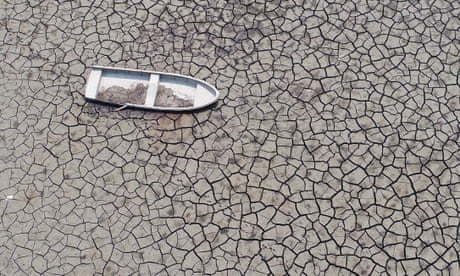
The imagery of the frontier lends itself to thinking only about land. But the past two centuries have witnessed a very different kind of frontier movement: the enclosure of the atmospheric commons as a dumping ground for greenhouse gas emissions. In the 21st century, agriculture and forestry (which includes land clearance for cash cropping) contribute between a quarter and a third of greenhouse gas emissions.

This is inevitable, because they’re profoundly energy- intensive, and have become more so. That’s a big problem, because there are no more atmospheric commons to enclose, and no obvious way to keep the costs of climate change off capitalism’s ledgers. Nowhere is this clearer than in the faltering global farm, whose productivity growth has been slowing, just as it did for English farmers in the middle of the 18th century. Agro-biotechnology’s promise of a new agricultural revolution has so far been worse than empty – failing to deliver a new yield boom, creating superweedsand superbugs that can withstand glyphosate and other poisons, and sustaining the cheap food model that is driving the ongoing state shift in the world’s climate system.

Climate change represents something much more than a closing frontier – it is something akin to an implosion of the cheap-nature model, bringing not the end of easy and cheap natures, but a dramatic reversal. As a growing body of research demonstrates, climate change suppresses agricultural productivity. “Climate” refers to extremely diverse phenomena, including drought, extreme rainfall, heat waves and cold snaps. Soy, the paradigmatic neoliberal crop, has already experienced what agronomists call yield suppression as a result of climate change. How much remains a matter of debate, but many analyses land somewhere in the area of a 3% reduction in growth since the 1980s – a value of $5bn per year from 1981 to 2002.

Worse, climate change promises absolute declines. Each 1C increase in average annual global temperature is accompanied by a greater risk of dramatic effects on global farming. Agricultural yields will decline between 5% and 50% (or more) in the next century, depending on the time frame, crop, location and extent to which carbon continues to be pumped into the air at today’s prodigious rates. World agriculture will absorb two-thirds of all climate change costs by 2050. That means that both the climate and capitalism’s agricultural model are in the midst of an abrupt and irreversible moment of change.

There is little reason to imagine that climate change won’t break the modern food system. Worse, industrial food production is a breeding ground for pandemic disease, and reasoned analysis suggests that the kind of concentrated animal-feeding operations that bring us cheap meat will also bring viruses that could decimate the human population. Again, this is nothing new. Just as early-modern climate change and the plague brought about the end of feudalism and the beginning of capitalism, so we face a future in which climate change and a vulnerability to big systemic shocks augur a dramatic end for capitalism’s ecology.


'A reckoning for our species': the philosopher prophet of the Anthropocene


We’re astute enough students of history to see that what follows capitalism might not be better. Around the world, fascism has emerged from liberalism’s soil. Yet precisely as capitalism’s bills come due, communities are both resisting and developing complex and systemic responses at capitalism’s frontiers. Around each of the seven cheap things that make capitalism possible – nature, work, care, food, energy, money and lives – there are movements that are developing alternatives. Whether in a globally reviving labour movement, in the Movement for Black Lives’ demands around food, reparations and local economic sovereignty, or the feminismo campesino y popular (“popular peasant feminism”) developed by the La Via Campesina peasant movement in Latin America to bring together concerns around food, care, nature and work, movements are both fighting and developing intersectional alternatives.
Advertisement


John Jordan, an activist and co-founder of the UK’s Reclaim the Streets movement, argues that resistance and alternatives are “the twin strands of the DNA of social change”. That change will need resources and space to develop. If we are made by capitalism’s ecology, then we can be remade only as we in turn practise new ways of producing and caring for one another together – a process of redoing, rethinking and reliving our most basic relations.

Adapted from A History of the World in Seven Cheap Things by Raj Patel and Jason W Moore, published by Verso on 22 May, and available to buy at guardianbookshop.com. Patel will be speaking at a launch event for the book in London on 15 May.

• Follow the Long Read on Twitter at @gdnlongread, or sign up to the long read weekly email here.


How the chicken nugget became the true symbol of our era

Link: https://www.theguardian.com/news/2018/may/08/how-the-chicken-nugget-became-the-true-symbol-of-our-era  


Sunday, June 30, 2019

"The World That Food Made" with Raj Patel


"The World That Food Made" with Raj Patel


November 14, 2018 | Raj Patel, an award-winning writer, activist and academic, connects our modern food system with history and sexism and calls for integrated change to create a more sustainable food system.


Raj Patel is the author of Stuffed and Starved: Markets, Power and the Hidden Battle for the World's Food System. He is currently working on a documentary and book about the future of the food system


Friday, May 31, 2019

Alternative meats are finally hitting the mainstream


Beyond Meats IPO success signals meat alternatives here to stay

Alternative meats are finally hitting the mainstream.


Stephen Johnson
02 May, 2019

Image source: Beyond MeatsTECHNOLOGY & INNOVATION

Beyond Meats began trading publicly on Thursday under the ticker BYND.

Beyond Meats and Impossible Foods are two alternative meat companies that've been dominating the space in recent years, with investors such as Bill Gates and Leonardo DiCaprio.

Alternative meat companies could significantly help the U.S. food industry cut down on environmentally harmful practices, namely the raising of cattle.


TECHNOLOGY & INNOVATION

Beyond Meats began trading publicly on Thursday under the ticker BYND.

Beyond Meats and Impossible Foods are two alternative meat companies that've been dominating the space in recent years, with investors such as Bill Gates and Leonardo DiCaprio.

Alternative meat companies could significantly help the U.S. food industry cut down on environmentally harmful practices, namely the raising of cattle.


Shares of Beyond Meat soared on Thursday as the plant-based food company began trading publicly for the first time. The stock was trading at $68 (as of 2:30 p.m. E.T. Thursday) — more than three times higher than what the company expected.

The takeaway? Meat alternatives are quickly hitting the mainstream, and they're bringing in big money. Beyond Meat and Impossible Foods are currently the two biggest names in the meat alternative industry. You can find Beyond Meat hamburgers in restaurants such as Carl's Jr., A and W, Del Taco and T.G.I. Friday's, while Impossible Foods offers meatless burgers in some 7,000 U.S. restaurants, as well as Burger King, which recently released the Impossible Whopper.

In a market test in St. Louis Burger King restaurants, the Impossible Whopper performed so "exceedingly well" that Burger King wants to offer the vegetarian sandwich nationwide. One problem: Impossible Foods currently doesn't have enough supply to meet demand.

The company said in a statement that it "recognizes the inconvenience that this shortage is causing and sincerely apologizes to all customers, particularly those who have come to depend on the additional foot traffic and revenue that the Impossible Burger has generated."

Beyond Meat and Impossible Foods are doing well, to say the least. But with large food suppliers, such as Tyson and Purdue, also developing meatless food products — don't expect these two names to be the only vendors in the alternative meat space for long.

"There's a sense that there's a movement going on that's much bigger than any one company," Beyond Meats CEO Ethan Brown told Vox in April.

​The environmental effects of the meat alternatives industry

Raising animals for the meat that ends up in our restaurants is an extraordinarily resource-intensive process. Globally, livestock farming accounts for 15 percent of human-caused greenhouse gas emissions. In particular, cattle exact a heavy toll on the environment through the large amounts of food the animals require, the land used to grow that food, and, most importantly, the methane they produce. After all, methane is a greenhouse gas that's 30 times as potent as carbon dioxide.


Of course, there are many other problems with the U.S. food industry, including, to name a few, the antibiotics given to animals (and the consequent antibiotic resistance they build up), the energy consumed in the maintenance and transport of meat products, and the ethics of killing animals for meat — especially in the context of factory farms.

Meat alternative companies could help the nation cut back on all of these environmental stressors. A 2018 study from the University of Michigan — which, to be sure, was commissioned by Beyond Meat — compared the environmental costs of producing meatless and traditional beef burgers,
finding that producing meatless burgers takes:

99% less water

93% less land

90% fewer greenhouse gas emissions

Nearly 50% less energy


Should ‘ultra-processed’ foods include health warnings?


Ultra-processed danger

Should ‘ultra-processed’ foods include health warnings?


STEPHEN JOHNSON  30 May, 2019

A growing body of research, including two recent studies, shows how ultra-processed foods can lead to multiple diseases and shorten lifespan.

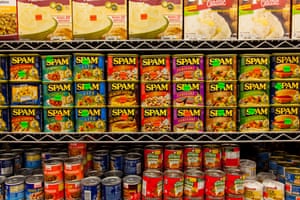
Ultra-processed foods include soft drinks, packaged snacks, reconstituted meat, pre-prepared frozen meals, and more.

Other research suggests that warning labels on food can affect what people choose to eat.


The U.S. government requires sellers of cigarettes and alcohol to include health warnings on the labels of their products. Should vendors of "ultra-processed foods" be required to do the same?

New research has some saying yes.

This week, the BMJ published a pair of studies that show how diets high in ultra-processed foods are linked to significantly higher rates of cardiovascular disease, cerebrovascular disease, and death.

The findings build upon decades worth of evidence showing that processed foods can be devastating to long-term health.

In the four groups that make up the NOVA food classification system, ultra-processed foods are ranked as the unhealthiest. They include "soft drinks, packaged snacks, reconstituted meat, pre-prepared frozen meals," with ingredients like "sweeteners, colors, preservatives, and food-derived substances like casein, lactose and gluten."

These foods are unhealthy not only because they contain bad ingredients or lack nutrients, but also because they undergo processes like extrusion, molding, and milling.

"The nature of the cause is associated with the physical and chemical changes that happen to the food as a result of this high degree of industrial processing," Mark Lawrence, who co-wrote an editorial on the pair of recent studies, told Australia's ABC News. "It's an independent risk factor irrespective of the presence of, say, sodium or added sugar in the food."


Lawrence said the recent studies, along with the solid body of research on ultra-processed foods, have multiple implications for policy.

"I think the front of pack labelling is the most tangible one at the moment," Lawrence said. "It could be something as simple as, is this an ultra-processed food or not."

​Junk food warnings


Would requiring makers of ultra-processed junk foods to include such labels on food be government overreach? Provided that you're okay with the warnings the U.S. government currently puts on tobacco and alcohol, there seems to be little reason why we shouldn't place the same labels on ultra-processed food. In fact, there may even be more reason to include warnings on junk food, as noted by David Katz for Time:

". . . unlike tobacco or alcohol, food is supposed to be good for us. It is supposed to be sustenance, not sabotage. You can't smoke tobacco and avoid tobacco. You can't drink alcohol and avoid alcohol. But you can eat food and avoid junk. There is, in fact, an impressive range of overall nutritional quality in almost every food category — so we could abandon junk food altogether, and quickly learn not to miss it."

There's some reason to think junk-food warning labels would be effective in affecting what people choose to eat. In a 2018 study from the University of Melbourne, researchers found that warning labels — particularly graphic, negative warnings — encouraged people to exercise self-control when selecting meals.

"We can really see a signature of deploying this self-control to resist unhealthy choices," study co-author Stefan Bode of the University of Melbourne told Australia's ABC News. "This is something we're really excited about to follow up and see how this happens."


Link: https://bigthink.com/politics-current-affairs/processed-food-warning


Wednesday, May 1, 2019

Vapes are full of flavors—and fungi


THE DICE


HEALTH
Vapes are full of flavors—and fungi


Your lungs could be the ones to suffer.

By Kat Eschner April 24, 2019


The list of health concerns about vaping grows longer.


Deposit Photos


When they first came on the market, industry advocates originally touted vapes—electronic nicotine delivery systems such as a JUUL—as a smoking cessation aid. In the time since, they’ve exploded in popularity among young people, leading to worries that brands like JUUL are contributing to a new and dangerous nicotine addiction epidemic among teens who would never have thought to light up a traditional cigarette. E-cigarettes have public officials concerned, and a new studyfrom Harvard researchers suggests there are two more reasons to worry: the presence of fungi and bacteria in vape juice and e-cigarette cartridges.


In the study, David Christiani and his colleagues tested 75 e-cigarette products in total for two contaminants: endotoxin, which is part of the cell walls of a class of bacteria, and glucan, which is part of the makeup of fungi. Chronic exposure to endotoxin is linked to asthma and reduced lung capacity; while the form of glucan they found is known to cause inflammation, which is a big problem in a sensitive system like your lungs. Both microbial products are found in many places out in the world. The issue here is that they’re in a substance that’s inhaled—and inhaled frequently.

Of the products they tested, of which about half were e-cigarette liquid and half were cartridges, they found endotoxin in 17 products, or 23 percent, of products. Eighty-one percent, or 61 products, contained glucan. Even though Christiani says the concentrations of these two microbial products “are not very high,” knowing they’re present “adds a couple more agents to the already long list of exposures from e-cigarette products,” Christiani says.


00:16
07:30


E-cigarettes work by heating up a nicotine-containing liquid so it vaporizes and can be inhaled by users. This liquid also contains flavorings, from the traditional (mint) to the avant-garde (banana.) The flavors are thought to be one of the reasons that e-cigarettes have become so popular among young people. Nobody really knows what happens to the juice chemically when it’s heated up.. Many compounds break down into dangerous chemicals when heated, and the researchers still don’t know very much about what’s in e-cigarette fluid.

Experts do know that some flavorings are linked to heart and blood vessel damage.) And there is a body of evidence showing that e-cigarettes product harmful carcinogens and other chemicals, as well as exposing users to metal byproducts from the devices themselves. However, because e-cigarettes are loosely regulated, with a huge diversity of products in the marketplace, it’s hard to definitively state what’s in them. It doesn’t help that the e-cigarette industry, like the traditional tobacco industry, has a stake in obscuring the health risks of their addictive (and lucrative) products.

This new study, which looked at brand-new products, also points to the fact that e-cigarette products are getting contaminated with microbes somewhere in the production process. In the case of cartridges, he speculates that the presence of microbial products may be the result of contamination on the cotton wicks that are part of the cartridge. But nobody knows yet, though his team is going to try and find out in further research.


Sanjay Sethi, a professor of medicine who specializes in lung health at the University of Buffalo, says the findings are “interesting, but not surprising.” Sethi was not involved with the study. He would like to see further research elaborating on how the levels of endotoxin and glucan in e-cigarettes stack up against those in traditional cigarettes, which he says would give the results more context. However, he agrees the current study’s findings are another reason for concern about e-cigarettes.


tags:
e-cigarettes
vaping
asthma
lung cancer
lungs
cigarettes
health


Link: https://www.popsci.com/vaping-fungi-bacteria


Wednesday, April 24, 2019

Information Overload is the Bane of my Life


My daily struggle is to understand what is important, to my situation, in the constant barrage of information on the Internet.  


What can and should be ignored?  

Is my purpose to seek distraction, novelty and entertainment? 

Or is the goal and purpose to my Net Surfing to gain valuable knowledge?  

What do I hope to accomplish?


“There are things that attract human attention, and there is often a huge gap between what is important and what is attractive and interesting."

- Yuval Noah Harari   


And Donald Trump has not helped make being informed easy with all his mixed messages.


“If the doors of perception were cleansed every thing would appear to man as it is, Infinite. For man has closed himself up, till he sees all things thro' narrow chinks of his cavern.”

― William Blake, The Marriage of Heaven and Hell

Friday, April 19, 2019

The unstoppable rise of veganism: how a fringe movement went mainstream


Smiling Cow

Happy Cow supports Vegan Revolution


The unstoppable rise of veganism: how a fringe movement went mainstream 


Health, climate change, animal welfare... what’s driving more people and brands to embrace a plant-based lifestyle?

by Dan Hancox


Thu 9 Aug 2018

7346232_orig   

A 2016 poll found Britain’s vegan population had increased from 150,000 to 542,000 in 10 years. 


Late on a Thursday afternoon in early March, just off Brick Lane in the heart of London’s nightlife hotspot Shoreditch, 23-year-old Louisa Davidson is taking calls and co-ordinating cables and scaffolds, as shocking pink Vegan Nights banners are hung around the expansive courtyards of the Truman Brewery. There is a chill in the air, quickly warmed by a buzzing atmosphere more like a music festival than an ethical food fair, as BBC Radio 1Xtra and House of Camden DJs play records, cocktails are poured and entrepreneurs sell zines and street wear alongside the vegan sushi, patisserie and “filthy vegan junk food”.


Davidson had been running weekend markets at the venue when she noticed a sharp increase in the number of vegan food businesses and vegan menus on offer. So last September, with her colleagues, she decided to put on a one-off vegan night market, with music, drinks and food. “On the day there were queues around the corner,” she says. “We were not prepared for it at all! There was so much interest that by Christmas we decided to make it a monthly thing. It’s all happened very quickly.” Inspired by its success, and the traders she was working with, Davidson switched from vegetarian to a vegan diet in January.

“We’re riding on that wave of veganism getting into the mainstream,” Davidson says. “People are curious about it and they’re finding out that vegan food is not just a boring salad, it’s experimental, and the food traders are amazing – people can have a drink, listen to music and hang out. First and foremost, we want to offer a positive platform, whether you’ve never had a fried jackfruit before or you’re a longstanding vegan.” Many of the traders are new to it as well, with a couple of them having launched their businesses at Vegan Nights. “It is a community and everyone supports each other’s businesses. It’s great to be a part of it.”


Quick guide Veganism in numbers Show


350% Rise in the number of vegans in Britain from 2006-2016;

542,000 people said they were vegans in 2016.

168,000 Veganuary 2018 participants, of which 60% were under 35, up from 3,300 on its 2014 launch.

185% Increase in vegan products launched in the UK between 2012 and 2016.


1944 The year the term vegan was coined by woodwork teacher Donald Watson.
Rejected words include ‘dairyban’, ‘vitan’ and ‘benevore’.


20% Percentage of under-35s who have a vegan diet.


Veganism might have recently acquired a hipster cache at buzzy London events such as Vegan Nights and the weekly Hackney Downs market established by influential blogger Sean O’Callaghan, AKA “the Fat Gay Vegan”, but its surging popularity is a national phenomenon, with plant-based food festivals and businesses booming from Bristol to Inverness.

The high street is adapting with incredible speed. Big chains such as Marks & Spencer and Pret a Manger have introduced vegan ranges, Wagamama has a new vegan menu, Pizza Hut recently joined Pizza Express and Zizzi in offering vegan pizzas, while last year Guinness went vegan and stopped using fish bladders in its brewing process, after two and a half centuries. Scrolling through Twitter’s popular #veganhour (an hour of online recipes and ideas running 7-8pm every Tuesday, and trending at number seven nationally when I looked), alongside less surprising corporate interventions from Holland & Barrett and Heavenly Organics is a tweet from Toby Carvery, trumpeting its vegan cherry and chocolate torte. Sainsbury’s and Tesco have introduced extended new ranges of vegan products, while the latter recently appointed American chef Derek Sarno to the impressive job title of director of plant-based innovation.

If this is the year of mainstream veganism, as every trend forecaster and market analyst seems to agree, then there is not one single cause, but a perfect plant-based storm of factors. People cite one or more of three key motives for going vegan – animal welfare, environmental concerns and personal health – and it is being accompanied by an endless array of new business startups, cookbooks, YouTube channels, trendy events and polemical documentaries. The traditional food industry is desperately trying to catch up with the flourishing grassroots demand. “What do you mean, weak, limp and weedy? In 2017, the vegan category is robust, energetic, and flush with crowdfunding cash,” ran an article headlined “Vegan Nation” in industry bible the Grocer in November, pointing to new plant-based burger company Vurger, which hit its £150,000 investment target in little more than 24 hours.


The rapid explosion of the annual Veganuary campaign, in which curious omnivores and vegetarians sign up to try out veganism for a month and are then plied with recipes and other advice, shows how fast veganism is growing. (The choice of January is significant, given the resonances of fresh starts, good intentions and post-Christmas diets.) Veganuary was launched in 2014, with 3,300 people signing up; by 2016, there were 23,000 participants, then 59,500 in 2017, and a staggering 168,000 this year – and these are just the numbers that signed up officially online. Notably, 84% of this year’s registered participants were female, while 60% were aged under 35. Showbiz magazines and websites are full of lists of fully vegan celebrities – Ellie Goulding, Natalie Portman, Ariana Grande, Woody Harrelson, JME, Ellen DeGeneres, Liam Hemsworth; we could go on – all of them making Beyoncé and Jay-Z look a bit wet, having tried a vegan diet for just 22 days.

A weekend outing to Blackpool in 2018 offers much of what it always did: seagulls, slot machines, big-screen sport, family meal deals, “traditional fish and chips”, pirate rides, poncho vendors, palm-readers and pound shops. But there are other, newer diversions, too. On a grey Saturday morning in low season, at St Thomas’ church, north of the city centre, the Blackpool Vegan and Green festival is humming with people. Something of the church’s evangelical spirit is alive here, too.

“We’re in a non-vegan world,” says volunteer Elizabeth King, delivering her “10 steps to going vegan” talk in a back-room. “But things are changing rapidly – and if you’re trying to go vegan, you’re a pioneer.” She talks about shopping challenges and getting around social stigma, meal-planning and vitamin supplements, how to make holidays and dining out easier, how to check labels and online resources – and the group of new vegans and could-be-vegans asks keen questions and shares local tips. “People have an assumption you live off lettuce, don’t they? But that’s changing.”


Play Video
1:02 Watch an introduction to east London's Vegan Nights food festival – video

With almond milk and vegan ranges now available in supermarkets, it’s a testament to soaring public curiosity that people are being drawn to once specialist events in such numbers. “It’s jam-packed isn’t it!” says Michelle Makita, with a laugh, from the Little Blue Hen vegan soap stall. Over the course of the day, hundreds of people stream in; visitors from across Blackpool, the north-west, even Spain.

There is an African superfoods stand, a Glaswegian jerk pie company, Turkish gözleme flatbreads, cakes, curries, wraps, sushi, vegan candles, vegan pet food, shlocky T-shirts and accessories (“Zombies eat flesh, go vegan”). Darting around in a high-vis jacket, organiser Roddy Hanson squeezes past the prams, teenagers, bearded veterans in earth-tone baja tops, normies and newbies.


Grabbing some air and calm when the lunch rush has finally subsided (at about 4pm), Hanson is a mine of information about vegan history and culture and has seen a tightly bound, activism-driven outsider community become an accepted phenomenon in a matter of a few years. “When I went vegan in the 1980s, it was primarily two groups: hippies and punks. Some people who come to our events think it’s going to be wall-to-wall people with pink hair and piercings, but the whole culture has changed – it’s a very broad cross‑section.”

He has been vegan for 30 years, a veteran of animal rights activism, but this convivial, family-day-out approach to winning converts is more his speed. “I’ve never been the sort of person who wants to stand outside fur shops and get into arguments with people. It’s more positive this way and you can choose to engage with it if you want, rather than be confrontational. I’ve been involved in anti-circus demos where fights have broken out with some of the protesters and the circus staff; that kind of thing was a lot bigger in the 80s. Now it’s based around vegan groups and fairs, which didn’t really exist then.”

Last summer, Paul White opened Faringo’s, the first vegan restaurant in Blackpool. Only a year ago, he was an omnivore, running a hotel with an Italian steakhouse attached in which he was also head chef. One weekend, they had a vegan guest staying, which prompted “lots of lengthy conversations” about veganism and he decided to try running a small vegan menu alongside the existing one. “Within two weeks, we had more people eating vegan food than anything else,” he recalls. “What surprised us was people were coming from all over Blackpool. There were hidden vegans in Blackpool who were struggling in silence! That was June last year and at that point we decided to turn the restaurant 100% vegan and it just exploded on Facebook. I went vegan as well, as head chef, and I feel better for it. We have such a wide range of people coming in: we’ll have a table of six people who are protesters from an anti-fracking demonstration [Preston New Road fracking site is just three miles away], sat next to a table of two people who are multimillionaires, sat next to international rugby players.”


Whereas before, veganism may have been viewed like you were giving up something, now it’s been reframed as what you gainKip Andersen, Cowspiracy co-director

There’s been a knock-on effect to their success, he says, with numerous other restaurants in the city beginning to offer vegan options on their menus – and White is preparing to open the first vegan food shop in Blackpool, too. One of the main drivers, he says, is the critical mass of information available online, both motivating people to change in the first place and making it easier than ever to do so. “When people see documentaries like Cowspiracy, one is enough. The fact social media is as big as it is now, it spreads things so much faster. I think that’s why it’s mushrooming right now. And it is mushrooming.”

In May 2016, the Vegan Society commissioned Ipsos Mori to poll 10,000 people on their dietary habits and found that Britain’s vegan population had increased from 150,000 to 542,000 in the space of a decade (alongside a vegetarian population of 1.14 million). Of those, 63% were female and, significantly for veganism’s future growth, almost half were in the 15-34 age category. What is astonishing is that the pace of change in the two years since the survey was carried out has been seemingly exponential – it seems plausible to speculate the number may have doubled again in that time.


Tim Barford, manager of Europe’s largest vegan events company, VegfestUK, has been vegan for three decades and points to the deeper roots of this recent explosion of interest. “There is a big plant-based shift culturally,” he says, “a systemic change in the way that we’re approaching food and the way that we feed ourselves. Remember that successive governments over 15 years have been ploughing money into persuading people to eat more fruit and vegetables, with the five-a-day campaign. Then you’ve got a real cultural change among millennials, which is very much built around justice and the way we look at animals.”

He also points to a new non-violent breed of millennial activist, such as James Aspey, who took a year’s vow of silence to raise awareness of animal rights issues. “Thirty years ago, it was more balaclavas and intimidation, almost verging on terrorist activities. This new breed are not playing up to that stereotype – they recognise the danger of it. There’s a real understanding and compassion among today’s activists. I’m a bit older and that wasn’t there in the radical 70s and 80s, with the punk rock, ‘fuck you’ kind of attitude – it’s now more reflective and therefore more effective.”

That less aggressive approach is winning a lot of new converts, but for veterans such as Barford it’s still an evangelical movement with an irreducible political message. “Our challenge with VegFest is to combine the feelgood factor, the fun and sociable atmosphere, with quite a strong moral and ethical standpoint. We want to attract people in without putting them off, but then once we’ve got them in, we don’t want them to walk away thinking this is just a health fad, just food and shopping and entertainment.”
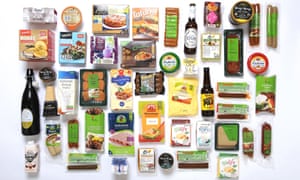

A sample of the ever-growing range of vegan products. Photograph: Jill Mead for the Guardian

He thinks the rise of Jeremy Corbyn – a vegetarian of almost 50 years, who has recently spoken about his admiration for his vegan friends – has helped fuel “a definite appetite for justice. Justice is no longer a dirty word, people can have a conversation about justice for the 70bn animals killed for food, without being shot down and screamed at as a radical extremist – and I think Corbyn has helped a bit, with the way he’s won over a bit of the middle ground.”


One influential factor that comes up regularly when talking to new vegan converts is a series of polemical online documentaries, or “advocacy films”, many of them on streaming services such as Netflix, documenting the damage animal agriculture does to the environment, or meat-eating does to human health, or exposing gory scenes in slaughterhouses and factory farms. In Blackpool, Michelle Makita tells me the 2005 film Earthlings, with its harrowing, hidden-camera footage of animal suffering, was the epiphany that led her to switch to veganism. “I think I cried for about three days – I was hysterical,” she says. The thriving sub-genre’s titles tell their story in microcosm: Vegucated, Planeat, Forks Over Knives, Live and Let Live, Peaceable Kingdom. A common trope among recent converts is that the revelations about the brutality of the meat, dairy and egg industries were hidden from view, until these documentaries exposed them.

The genre’s influential break-out hit was the 2014 documentary Cowspiracy, which looks at the environmental impact of animal agriculture, its contribution to greenhouse gas emissions, deforestation and excessive water use. It is a film about climate crisis in the first place, which argues that meat and dairy farming is the hidden evil responsible for a dying planet. Made by Californian documentary-makers Keegan Kuhn and Kip Andersen, amiable frontman Andersen tells the story of how Al Gore’s film An Inconvenient Truth changed his life as a young man (“It scared the emojis out of me”) and committed him to an environmentally conscious lifestyle. With Kuhn, he has now no doubt changed the lives of countless others by persuading them that turning off the taps, cycling everywhere and home composting is not enough: that worldwide conversion to veganism is the only possible way to save the planet.

Cowspiracy’s marketing strapline claims it is “the film environmental organisations don’t want you to see”. The alleged conspiracy of the title is that environmental groups such as Greenpeace, Sierra Club and the Rainforest Action Network are focusing all their efforts on fossil fuels and renewable energy, while ignoring the real threat from livestock farming. The evasiveness of their spokespeople on camera is often embarrassing, although perhaps the reason these NGOs wouldn’t want people building their politics around the film is its fast-and-loose use of highly questionable statistics. The original version of the film claimed 51% of global greenhouse gases were produced by animal agriculture, based on a single, non-peer-reviewed academic paper – the scientific consensus is closer to 15%. “Don’t use the 51% figure. Please. You’re making us all look bad,” vegan author Danny Chivers wrote in the New Internationalist. “If you want more people to understand that animal agriculture is a significant part of the climate change picture, bear in mind that there are lots of good reasons why many people are focusing on the fossil fuel industry and it’s not an either/or issue.”

For the version that premiered on Netflix in 2015, Andersen and Kuhn changed the figure and Leonardo DiCaprio came onboard as executive producer. Since then, they have made an equally hard-hitting follow-up, What the Health, which looked at the effect of meat and dairy on human diseases. While their films have been controversial (registered dietician and vegan Virginia Messina called What the Health “junk science”), their impact as polemicists is undeniable in a world where different strategies of evangelism are always being debated. Cowspiracy’s original crowdfunding pitch speaks volumes about its appeal: “Together, we aren’t just creating a movie, we are creating a movement.”


Cowspiracy trailer.


Of course, the vegan movement already existed, but Cowspiracy’s success reflects a new emphasis on animal agriculture, in particular cattle farming, in the context of the deepening climate crisis. Critical in this refocusing from animal welfare as the primary motive for veganism was a 2006 report produced by the UN, Livestock’s Long Shadow, which described the livestock sector as one of the most significant contributors to environmental degradation, both globally and locally. A follow-up UN report in 2010 warned that rising meat and dairy consumption, and a global population predicted to be 9.1 billion by 2050, meant a shift towards veganism was vital to save the world from climate catastrophe and food shortages. Overall, agriculture accounts for 70% of global freshwater consumption, 38% of total land use and 19% of the world’s greenhouse gas emissions; within this, the footprint of meat and dairy production is heavily disproportionate.

Oxford academic Dr Marco Springmann has attempted to model what a vegan planet would look like, especially as climate change, food shortages and population growth intensify. He projected that were the world to adopt a vegan diet by 2050, the global economy would benefit to the tune of $1.1tn savings in healthcare costs and environmental savings of $0.5tn and a cut in greenhouse gas emissions by two-thirds. It’s quite hard to argue with numbers that speculative – especially when one is not a fellow of the Oxford Martin Programme on the Future Of Food – but what is certain is that the makers of Cowspiracy were right in their general argument, if not some of the key specifics.


“Our motivation was that animal agriculture was so under-discussed,” says Kuhn. “We really felt promoting a plant-based lifestyle had to be at the forefront of the environmental movement and environmental veganism had to be a movement in itself, versus animal rights or health.”

The speed of change they have witnessed since then has been exhilarating – even in just four years. “Information can pass so freely and easily now,” Anderson says. “It was only a matter of time before the truth about animal agriculture was revealed. It’s not in your face like racism or sexism – it’s deeply ingrained in our culture, and financially ingrained, but now that it’s revealed, people just don’t want to be a part of that horrific industry. It’s like a weight off their shoulders; getting clean of the lies and the destruction.

“People feel empowered, it doesn’t feel like a sacrifice. That’s a huge shift. Whereas before, veganism may have been viewed like you were giving up something, now it’s been reframed as what you gain: you gain health, you gain a greater sense of living in bounds with your values, you gain all the environmental benefits.”


Kuhn says that consumer pressure from below will create a domino effect. “These corporations are just going to follow the dollar, and follow consumer demand, which hopefully will force them to switch to sustainable, plant-based agriculture.” The next step, he says, is to push governments to abandon tax breaks and subsidies to animal farmers. They are keeping the advocacy-via-documentary ball rolling. Currently in production are Seaspiracy, which focuses on the oceans and “the myth of sustainable fishing”, and Running for Good, a sports documentary following British marathon runner Fiona Oakes, “to break the stereotypes that veganism holds you back from any kind of athletics”.


Rapidly growing consumer awareness and changing eating habits have combined with a dawning realisation about the extent of the sustainability crisis to send shockwaves through the food production industries. With broad agreement that the future of animal agriculture has to change, the big money investors are moving quickly. Richard Branson announced last year that he was investing in a startup called Memphis Meats, which is developing lab-grown meat from animal cells as an alternative to animal agriculture, sometimes called “clean meat”. “In 30 years or so, I believe we will be shocked [that] we killed animals en masse for food,” he wrote. “Tyson Foods, one of the biggest meat businesses in the world, has recently invested, joining the likes of Bill Gates and Cargill, the second-largest beef producer in the world. It’s no surprise that the meat and dairy substitutes industry is predicted to be worth $40bn by 2020.”

The executive vice president at Tyson, Justin Whitmore, made a telling comment in explaining the company’s diversification in the face of a looming crisis of sustainability. “We don’t want to be disrupted,” he said in February. “We want to be part of the disruption.” While clean meat is not vegan, by definition, it is a parallel response to the same problem – and is accompanied by the soaring popularity of alternative vegan proteins such as tempeh, amaranth, seitan and nutritional yeast.

Even within the hard-headed world of big capital, there are serious manoeuvres afoot to push food production away from meat and dairy. In 2016, a group called Fairr (Farm Animal Investment Risk & Return) co-ordinated a group of 40 large institutional investment funds, including Swedish state pension funds, worth $1.25tn (almost £900bn) publicly to urge major food producers and retailers such as Kraft Heinz, Nestlé, Unilever, Tesco and Walmart to develop alternative, plant-based sources.

“There’s growing investor support,” says Rosie Wardle, who worked on the project for Fairr. “Across the board now, market research firms, food analysts, industry commentators, they’re all talking about alternative proteins and flexitarian diets – they’re the key food trends for this year. The risks around intensive livestock production are becoming harder to ignore and people recognise that is going to impact business as usual.”


Vegan Nights at the Truman Brewery, Brick Lane.


Fairr’s latest report, Plant-Based Profits, points to the rise of flexitarian diets among young adults who may not be full-time vegans. Fairr’s head of research, Aarti Ramachandran, sees the industry moving only in one direction. “Companies are investing in a lot of research and development because they know that today’s millennials are tomorrow’s consumers and they’re going to be setting the stage in terms of future growth prospects. That’s a key point that our investors are interested in: this is a market that’s not going to go away. Plant-based diets aren’t a trend or a fad; we see this very much being the basis of consumer growth.”

The business world seems to agree. In the last few months, you can scarcely move on Forbes.com for articles with headlines such as “Here’s Why You Should Turn Your Business Vegan In 2018”. With this kind of money swirling around, and a combination of hipster entrepreneurs, hedge funds and major supermarket chains defining veganism in 2018, it’s easy to see why some vegans feel that the movement’s traditional association with anti-capitalism is a position rapidly disappearing in a fog of marketing hype. Popular, youth-orientated vegan cookery startups such as Bosh.TV, which scored 1m followers on Facebook within a year of launching, as well as a Bosh! book deal, define the new spirit of veganism as a lifestyle, rather than the cornerstone of a political worldview. “Just three years ago, we weren’t even vegan ourselves,” wrote cheerful founders Henry Firth and Ian Theasby, recalling late-night kebabs on the way home from the pub. “Back then, the ‘V’ word had a touch of anger associated with it; it was loaded with political and ethical connotations.”

The promotion of a flexitarian approach of reducing the use of animal products, without cutting them out altogether, has raised hackles among some activists. In 2014, the Vegan Society rebranded with a “love vegan” campaign to mark its 70th anniversary, which proposed “a few small changes” if full veganism seemed a step too far. This prompted a backlash among some animal rights activists and claims that the organisation was more interested in being a marketing body for vegan businesses than an ethically driven campaign group. “Is veganism no more than a capitalist lifestyle choice?” ran a rhetorical question on the Red Black Green blog. “Veganism was for a long time associated with the counter-culture and seen as difficult,” wrote Vegan Society CEO, Jasmijn de Boo, in 2013. She spoke of softening the movement’s image: “One can become vegan in stages – there are no rules and you are only answerable to your own conscience.”

Veganism’s mainstream rise has certainly benefited from this conscious rebranding: for better or worse, it is much cooler than it used to be. “It’s a lifestyle, a community, a culture, an ever-expanding club where the only price of entry is being mindful and making a positive change,” goes the motto of the Young Vegans pie and mash shop in north London. Social media has spread the word with incredible speed, via Twitter hashtags, thriving “wellness” and cookery YouTube vloggers and Instagram influencers. It’s not just the obvious clean-eating celebrities and channels that have taken up the subject: even Unilad, a site not exactly known as a bastion of compassion and political sensitivity, commissioned a powerful 20-minute documentary,Meat the End, about “the horror and abuse” of animal agriculture.

Animal agriculture is choking the ​Earth and making us sick. We must act now
James Cameron and Suzy Amis Cameron


With a seemingly growing number of young people trying out vegan diets for personal health reasons (39% of the generally young, generally female Veganuary participants cited this as their motive), and its association with often controversial social media influencers, concerns have been raised that veganism provides a socially acceptable cover for disordered eating. “Are you depriving yourself or finding plant-based alternatives? This is where a lot of my problems lay,” wrote Lila Flint Roberts in an open letter on the Not Plant-Based blog. “I was just another individual who turned veganism into an eating disorder.”

British Dietetic Association spokeswoman and registered dietician Linia Patel is more than familiar with the problem. “We do see this. It’s very easy for people who have problems with disordered eating to take on veganism as a mask for something deeper that’s going on, because it’s cutting out huge food groups and for them it’s a way to control their diet that’s socially acceptable.

“At the moment, it’s so faddy, and there are Instagram influencers who are becoming vegan, and maybe it works for them, in their specific scenarios. The key point is always individualisation and research – to know why you’re doing it and how to do it properly, rather than just jumping on a trend. People can run the risk of being deficient in b12, even protein and iron.” She is keen to point out though that, done correctly, going vegan can be very good for health.

With a potential post-Brexit trade deal with the US threatening to flood the British market with farming practices currently prohibited in the UK by EU regulations – chlorinated chicken, beef with growth hormones and bacon with banned additives – the appeal of a plant-based diet could get another substantial spike in the near future. With or without such a trigger, a major shift in the way British people think about the food they eat and how it is produced is underway – driven by an increasingly networked, savvy millennial generation who realise that the certainties of the world they are growing up in are deteriorating fast. Veganism is no longer niche or difficult and, as industrial agriculture bends to adapt to consumer demand and its own crisis of sustainability, it is only going to get more accessible – and more popular.
Meet the vegans: four examples of modern meat-free living

Kishani Widyaratna, 32: ‘‘My veganism fits in with the rest of my politics, which are very left-leaning’
Works in publishing and runs the Tinie Tempeh vegan Instagram account



FacebookTwitterPinterest ‘I’m glad to add to the visible vegan women of colour’: Kishani Widyaratna at the Spread Eagle, east London. Photograph: Sonka Horsman for the Observer New Review for the Observer
Advertisement


I’ve been vegan 10 years. In 2008, Jamie Oliver made a TV show, Jamie’s Fowl Dinners, going behind the scenes of egg and chicken farming, and he showed male chicks that are useless for the egg industry being suffocated in a Perspex, oxygen-deprived box, live on television. It sounds like Black Mirrorbut it happened. I’d been vegetarian since I was 13 and seeing that pushed me to look into how dairy and eggs are farmed on an industrial scale; it went from there. It’s an extension of the basis of my vegetarianism: I didn’t want to kill anything to live.

I’ve always loved food and cooked from a broad range of cuisines. My heritage is Sri Lankan and food and eating are important elements of that. Starting my Tinie Tempeh Instagram, I wanted to do something that would encourage me to cook, but also I wanted to create something fun and positive. So hopefully you can look at my feed and see the variety in what I eat as an enthusiastic home cook with a big appetite. I wanted to help show how easy it has become [to be vegan]. The transparency of social media means it’s not so much of a leap of imagination for people any more.

A significant part of vegan Instagram has these unhealthy trappings of being super body-conscious and clean eating-focused: there are a lot of thin, lean, white bodies and, frustratingly, you don’t have as high a visibility for the vegans who are people of colour or queer or fat or eating whatever they want. But things are slowly changing, with the vegan junk food movement for example and I’m glad to add to the visible women of colour in that space.

I’m also inspired by people such as Ruby Tandoh and Bethany Rutter and their desire to liberate our personal relationships to food and the body, so I wanted to showcase vegan food that was about enjoyment without shame. I’ve also made a group of vegan friends through Instagram and I’ve learned so much about places to eat, things that I can cook; it’s educational, too.

My veganism fits in with the rest of my politics, which are very left-leaning, informed by an intersectional feminist approach and also I’m a person of colour moving through the world. So while I am passionate about animal welfare and the environment, there are other struggles that are equally important to me and each feeds into the other.

Jamie Kidd, 35: ‘Glasgow is a great place to be vegan. There’s a real community’
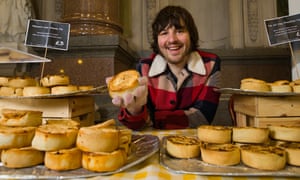

Founder, Cool Jerk Vegan Pies, Glasgow
 

‘The biggest seller is the macaro-nae cheese pie’: Jamie Kidd. Photograph: Jon Super for the Observer
Advertisement


I run a vegan scotch pie business. I always had a passion for food and being from Dundee, which is pie country in Scotland, I felt inspired and thought no one else was doing it. I started two and a half years ago and the response was great; we couldn’t keep up with demand to begin with. The biggest seller here is the “macaro-nae cheese pie” – because macaroni pies are a bit of a Scottish delicacy. I travel all around Scotland and north England, sometimes as far as Brighton and London to do vegan festivals. The haggis and mash always seems to do really well when I go down to England, maybe because haggis is seen as slightly exotic. I’m really into Glasgow’s music scene and


xpress your beliefs. I also own a lot of vegan tote bags and I always use them when I go shopping; it’s a bit of subtle campaigning. Veganism is a community and it’s growing. Hopefully one day it won’t be a community, it will be everyone.

Dan Strettle, 66: ‘There is a domino effect within families – parents are listening to their children’

Owner, Alternative Stores, Newcastle upon Tyne


Dan Strettle, a vegan for 50 years, and daughter, Zahra, in his shop. Photograph: Katherine Anne Rose for the Observer
Advertisement


I was in sixth-form at school, and I was anti-vivisection, and this lad in my class says: “If you don’t believe in experimenting on live animals, why do you eat them?” So I thought about it, woke up the next morning and said: “I’m going vegetarian.” But my concept of vegetarian was veganism; I didn’t realise there was a halfway stage. I was fully vegan by 1969 – next February it will be 50 years. I’ve never felt better.

When I changed, they said: “Oh, it’s a fad, give him six weeks, we don’t even know any vegetarians, let alone vegans – he’s one of these hippies, I mean look at his hair.” For school lunches I took in something called Nutmeat. It comes in a tin – it’s nuts and flour, combined to make what looks like luncheon meat, and you slide it out of the tin, cut it into slices. You had to go to a health food shop and there was one called Milburns in Newcastle; we used to go there every week.

There’s a bunch of vegan places in Newcastle now; we’re catching up with Berlin – that’s the leader. Vegans have never had it so easy! I run a vegan shop. We have a little bit of opposition from the supermarkets now, but we’re all right because people go in the supermarkets, see there’s one flavour of vegan cheese and then they come to my shop and see there’s 12 flavours. We don’t mind the supermarkets – they’re like a gateway drug: we’ve got the variety that the vegans and vegetarians want. They come to us for perfume, soap powder, toothpaste, all the groceries and the whole foods. Our bestseller is probably Sosmix. We sold 4 tonnes this year – that’s the same stuff I was eating in the 1970s!

We must be getting half-a-dozen new people a week coming in and saying: “Someone in my family has gone vegan and I don’t know what to feed them; can you help?” Or: “My son went vegan three months ago and we’ve all joined him now.” There is a domino effect within families and parents are listening to their children. There was a lad who came in who was 10 – he had made his own decision to be vegan; he was so determined, and his parents were so supportive. It’s great to see.