Addiction Commonality

Alcohol, Opiates, Fat and Sugar are all Addictive Substances: this blog is about that "addiction sameness".

Butter Pig Family

* A butter sculpture of a sow and her piglets

Sunday, May 13, 2012

Dr. Walter Willett on the Red Meat Debate

Harvard's Dr. Walter Willett on the red meat debate - Los Angeles Times


Five Questions: Dr. Walter Willett on red meat

The nutrition expert talks about the recent study and the public's reaction to it.
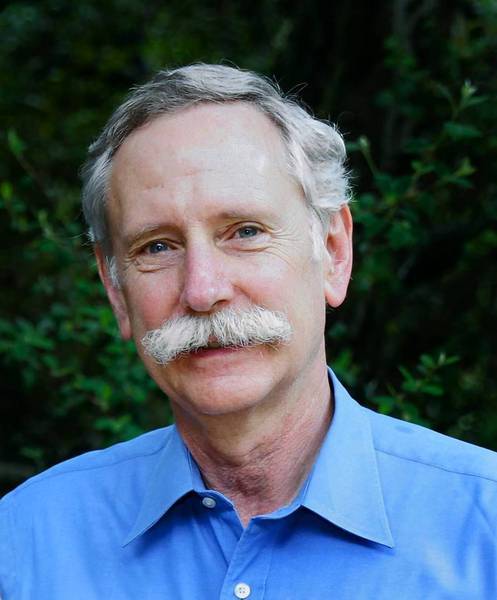
March 24, 2012|By Eryn Brown, Los Angeles Times

Dr. Walter Willett is chair of the nutrition department at Harvard's… (Amani Willett )
(Dr. Willet interviewed in "King Corn", a documentary about the lack of nutritional value in modern corn crops, that are mostly used for cattle feed 
and ethanol production.)

Dr. Walter Willett is the chair of nutrition at the Harvard School of Public Health. He's also a cow's best friend.

Earlier this month, Willett and colleagues, who have studied the link between diet and health for decades, published a study that followed more than 100,000 people over more than 20 years — and found that the amount of red meat they ate was linked to a rise in risk of premature death.


The notion that red meat might not be so great for you isn't exactly new, but carnivores cried foul. Willett answered a few of the critics this week.


Can you summarize briefly what you saw here? And what's the takeaway — is it OK to eat meat or not?

We looked at total mortality. And it wasn't too surprising that we did see a linear, step-wise increase in risk of dying prematurely with higher red meat consumption.

We went another step, and we compared one serving of red meat to other major protein sources, like poultry and fish and legumes. In every instance there was an advantage to consuming something else instead of red meat.

Individuals make their choices on the basis of many factors, health outcomes being one: religious beliefs, concerns about the environment, many things. But focusing in on health, it does appear that the data are quite strong.

There's no sharp cutoff. But when you get down to maybe one serving of meat or less per week the risk gets pretty low. If you really want to go for the lowest possible, it does look like not consuming red meat at all, or a couple times a year, is where you'd want to be.


This made a lot of people pretty angry and upset. One thing they wanted to know was, are you funded by PETA or the chicken industry? Another was, are you a vegan or vegetarian? 

No, we are not funded by any of those industry sources. These studies are funded by the National Institutes of Health.

I eat poultry and I eat fish. Maybe a few times a year, I eat red meat. That certainly wasn't always my habit. I grew up in the Midwest, and I think probably I had red meat three times a day, like some of the people in the study. But I've seen the data come in.


This study relies on surveys. Maybe people don't remember what they ate.

In principle, the ideal study would take 100,000 people and randomly assign some to eating several servings of red meat a day and randomize the others to not consume red meat and then follow them for several decades. But that study, even with any amount of money, in many instances is simply not possible to do. Most people don't want to stay on any prescribed diet, particularly if they're living in an environment where other people around them are eating other things.
How about grass-fed beef? Does the way the animals are raised make a difference?

We don't know for sure. In this study we were investigating red meat as it is consumed in the United States, which is mostly lot-fed, grain-fed beef. I'm quite sure we would not have enough people consuming mostly grass-fed beef to be able to look at that on its own.

There are some differences. Omega-3 fatty acid levels are somewhat higher in the grass-fed beef. But if someone's getting other sources of omega-3 fatty acids — if they're having fish once or twice a week — the additional amount probably won't make too much difference.

The total fat may be a bit lower. But we don't see that the fat per se is really related to the risk of getting heart disease or cancer. Cholesterol is more in the lean part of the red meat, so that's going to be just as high and maybe even higher in the grass-fed animals.

I think it would be nice to be able to study grass-fed beef directly, but I think in the meantime it's reasonable to assume that the answer is probably not going to be very different from what we saw here.


We also got emails that said, "My Aunt Bertha ate meat three times a day her whole life and lived to be 95!"

Of course, yes. You can find people who smoked a pack of cigarettes a day and lived to be 100, too. Any one example doesn't make the case.

It is pretty clear that people back in the 1950s, eating all this red meat, were not living very long compared to how long we're living today. Red meat consumption has gone down; poultry has gone up. There has been a general shift in a better direction in our diets.

Red meat is not the whole picture, but the reduction probably has been a contributor to the reduction in mortality rates that we have today.


Fruit Fly Boozers

NEW YORK

In the Friday, March 16, 2012 issue of the journal Science, researchers say,
sexually deprived male fruit flies are driven to excessive alcohol consumption, drinking far more than comparable, sexually satisfied male flies.
Researchers propose a biological explanation for why sex-deprived flies are attracted to drinking alcohol.  

If it proves true in people, it may help scientists find new medications to fight alcoholism.


What’s going on here?


The researchers implicates a substance in the fly brain called NPF. 

They theorize that pleasurable activities like having sex boost the activity of brain circuits that use NPF, and that feels good. 

If a fly is denied sex, the system goes into deficit, driving the fly to seek other rewarding activities such as drinking alcohol.

If this finding translates to humans, “one can say we could now understand why a negative experience, such as a sexual rejection, could drive somebody to drink”, said Ulrike Heberlein of the University of California, San Francisco, who led the research.


 Note:
Fruit flies are a favorite lab animal in part because scientists have exquisite control over their biology. Here, the researchers were able to alter brain function to zero in on NPF’s role.
___
Online:
Video of flies: http://bit.ly/xN2w3e
Science: http://www.sciencemag.org
___
Malcolm Ritter can be followed at http://twitter.com/malcolmritter


Reaction to Harvard's red meat study

Link:
Reaction to Harvard's red meat study - Los Angeles Times

Critics of red meat study
March 13, 2012|By Eryn Brown, Los Angeles Times / for the Booster Shots blog

On March 12th, researchers at the Harvard School of Public Health released a study that linked red meat consumption with increased risk of early death.

The report, which was published in the Archives of Internal Medicine along with the editorial “Holy Cow! What's Good For You Is Good For Our Planet” from Dr. Dean Ornish (the man who helped convince Bill Clinton to go vegan), attracted a lot of interest.


The American Meat Institute was among the first to dispute the findings.


In a statement issued Monday, the industry group criticized the Harvard study for “relying on notoriously unreliable self-reporting about what was eaten and obtuse methods to apply statistical analysis to the data.”

During an interview last week with The Times, Kaiser Permanente cancer researcher Lawrence H. Kushi — who was not involved with the Harvard study but said the work produced “important results" — acknowledged that epidemiological studies of survey data aren’t as rigorous as a blinded, randomized trial.


But since it’s really not possible to do such a study for this kind of research, large epidemiological studies are the state of the art in this discipline, Kushi said. 

 It’s “as good as you can do without randomizing people — some eating red meat, others not, and following them for 15 to 20 years,” he added.

Vegetarians loved the article about the Harvard research; die-hard carnivores — and, for that matter, some who just appreciate an occasional bite of steak — expressed dismay and  disdain.


All things in moderation.

Friday, April 27, 2012

McDonald's food mummy creator aims to get sued - Your Community

This Artist wants or rather challenges McDonald's to sue him so to help him along I'm passing on his video...


McDonald's food mummy creator aims to get sued - Your Community

Artist builds 'McMummy' out of hamburgers

"Tomb of the McMummies" creator aims to get sued by McDonalds after building sculpture from of $200 worth of food.
  1. A life-sized mummy made out of ground McDonald's food is making its way around the web this week inspiring many a grossed out reaction, but also, as was the artist's intention, a wider discussion about immortality and food in modern society.
  2. Share


  3. Ben Campbell, who describes himself as "some kind of artist from West Texas," created the mummy with approximately $200 worth of hamburgers purchased from the golden arched-juggernaut.

    On his Kickstarter page, Campbell explains that his "McMummy" is part of a larger art show he's working which will feature a wide variety of pieces created with and inspired by McDonald's Food.
    Published on Apr 11, 2012 by
    Tomb of the McMummies: An art show highlighting the connection between Ancient Egypt and Modern Society, featuring work created with and inspired by McDonald's food.

    Artwork files: http://www.mediafire.com/?scikjmdc97s9s6i

    Kickstarter: http://www.kickstarter.com/projects/977872454/mcdonalds-food-mummy-art-show


Monday, April 16, 2012

TEDxKC - Brené Brown - The Price of Invulnerability - YouTube

TEDxKC - Brené Brown - The Price of Invulnerability - YouTube


 ploaded by on Oct 12, 2010 TEDxKC talk synopsis: In our anxious world, we often protect ourselves by closing off parts of our lives that leave us feeling most vulnerable. Yet invulnerability has a price. When we knowingly or unknowingly numb ourselves to what we sense threatens us, we sacrifice an essential tool for navigating uncertain times -- joy. This talk will explore how and why fear and collective scarcity has profoundly dangerous consequences on how we live, love, parent, work and engage in relationships -- and how simple acts can restore our sense of purpose and meaning.

Speaker: Dr. Brené Brown is a research professor at the University of Houston Graduate College of Social Work where she has spent the past 10 years studying courage, shame and authenticity. She is the Behavioral Health Scholar-in-Residence at the Council on Alcohol and Drugs and has written several books on her research.
www.brenebrown.com/welcome

http://www.TEDxKC.org/

Wednesday, April 11, 2012

Unless You're In One Of These Two Places, You're Not Getting A Great Steak - Business Insider

Unless You're In One Of These Two Places, You're Not Getting A Great Steak - Business Insider

Josh Ozersky is an award winning food writer and author of 'The Hamburger, A History' and he has a message for you about the steak you're eating:
It's probably not that great.


Ozersky wrote a piece in Time Magazine called 'The Problem With The American Steak', and while it is about how our obsession with steak has made us all blind to low quality cuts, Ozersky mentioned two places where you'll get a cut above the rest.

From Time:
What are you really getting for your money? Not great steak. There is never enough prime beef to go around; much of what gets served in steakhouses is actually USDA “high Choice,” which has less marbling than USDA Prime. If you’re not in New York City or the military, your chances of seeing actual prime are low indeed. But you’ll still pay a premium for whatever it is you’re getting.


Read more: http://www.businessinsider.com/unless-youre-in-one-of-these-two-places-youre-not-getting-a-great-steak 


How Crappy Steakhouses fool their customers


Be forewarned.

Time Magazine's Josh Ozersky has an awesome piece out called 'The Problem With The American Steakhouse' where he goes on a sophisticated rant on how we're getting screwed out of our ideal steakhouse experience.

From Time:
I don’t write this as a food pundit. I say it as a glutton and as an American. Steakhouses are not really restaurants, in the strictest sense: they are closer in spirit to strip clubs or spas, places to which people repair for rites of costly self-indulgence, Dionysian revels in which stressed businessmen or harried wives vent their hypertension.

Ozersky talks about how steakhouses get away with this madness.

There are certain tricks of the trade to make so-so cuts look super:
So steakhouses find ways to trick you into thinking you are getting something precious. They bathe the meat in melted butter, which is good, but as much of a deceit as a padded bra; they buy steaks that have been jabbed with thousands of tiny needles to make them soft; they’ll use MSG or other tenderizers; they’ll call a steak “dry-aged” that has been in their refrigerator for three days (as opposed to a month in a real aging room.)


Sunday, April 8, 2012

The Freedom to Be Fat?

 The Freedom to Be Fat? The Politics of Movie Popcorn, Obama, and the FDA - The Daily Beast

As part of the health-care law, new rules would require restaurants and other food-serving establishments to post nutritional information. Movie theaters were on the original list sent out by the FDA. But, The New York Times reports, after some White House intercessions, cinemas were dropped from the list.

The Freedom to Be Fat? 

The Politics of Movie Popcorn, Obama, and the FDA


The.massive tub of movie popcorn, large enough that an infant could be bathed in, is typical mindless over eating.

One of these days, after we’ve quit worrying about labels like “nanny state” and sorted out the difference between “freedom” and mere selfishness or stupidity, we’ll look back on it as madness.

Until then, we’ll have Democratic White Houses overruling the FDA out of fear of Fox News.

This was the story in The New York Times this week, and it centered specifically on movie popcorn. As part of the health-care law, new rules would require restaurants and other food-serving establishments to post nutritional information. Movie theaters were on the original list sent out by the FDA.

 But, the Times reports, after some White House intercessions, cinemas were dropped from the list.

In a nation up to its eyeballs in fat, nothing is more symbolic of it all than movie popcorn.

A tub of the stuff, a recent study found, is the equivalent of eating, according to a WebMD reporter, “a pound of baby back ribs and a scoop of Häagen-Dazs.”

We’re talking about 1,100 to 1,400 calories and maybe 60 grams of fat. If you don’t follow these things, a person is supposed to take in maybe 2,000 calories a day, and 60 or 70 fat grams.

It’s always been a mystery to me why movie popcorn is so off the charts, since microwave popcorn has about half the calories and fat, or a third even. There must be something about the stuff they inject into the movie version that … I don’t even want to finish writing that sentence.

I know people hate hearing this, and I understand what the comment thread on this piece is going to be full of, and yes, I myself eat popcorn at the movies every once in a while. But let’s face it. The nutrition situation in this country is disgusting.

With the help of website calorielab.com, I list below some meals. See if you can match them to the calorie and fat counts (answers revealed at the bottom of the column):

  • Wendy’s: Big Bacon Classic, Great Biggie fries, large Coke

  • KFC: Three-piece meal, potato wedges, biscuit, large Pepsi

  • Bob Evans: Country spinach salad, meatloaf, Reese’s sundae

  • Cheesecake Factory: Sante Fe salad, Louisiana chicken pasta, Snickers bar cheesecake

  • Macaroni Grill: Shrimp and artichoke appetizer, chicken parmesan, tiramisu

The calorie and fat counts you need to match to these meals are: 1,709 and 100; 1,390 and 57; 3,980 and 105; 3,990 and 154.5; and 1,160 and 51.5.

You’ll note that even the lowest one, the 1,160-calorie meal, has nearly the full day’s worth of fat. It’s the fat in these places that gets you. And the sugar. Soft drinks officially don’t have any fat grams, of course, but that’s just a trick.

I know I sound like the worst sort of stick in the mud when I mention that it’s estimated that our horrible national nutrition costs us $71 billion a year, and things are getting worse.

By a lot of public-safety and health metrics, we’ve improved.

But on food, portions just keep getting bigger, and we just keep expanding with them.

And don’t kid yourself if you’re a cultural elitist and don’t eat at the Cheesecake Factory.

That swordfish that tasted great at that fancy restaurant the other night but didn’t taste quite as good when you tried to replicate it at home?

The difference was simple. A half a stick of butter. Makes anything taste better.

Look, Jack LaLanne I’m not. That Snickers bar cheesecake sounds pretty damn good. And I just can’t live without cheese.

The reason I carry around the (defensible, I tell myself) spare tire that I do is cheese. And to some extent cured meats. And a little ice cream, but that’s in phases.

So I’m not a health freak, and no, I don’t want to pass laws mandating the eating of broccoli.

But I do want us to understand how wrong and simple-minded our definition of freedom is today.

Any time the government appears to be suggesting some program aimed at getting people to do something that is obviously good for themselves—buying health insurance, not eating a bucket of popcorn big enough that two cats could screw in it—a certain number of idiots jump up and cry “Ha! Nanny state! Taking away my freedom!”

This, according to that Times article, is what the Obama administration feared Fox and Glenn Beck would do if it issued too many new FDA rulings.


Well, in one sense, any person is “free” to eat as much Snickers-bar cheesecake as he likes.

But that isn’t actually what freedom means. Actual freedom contains elements of responsibility and recognition of oneself as an actor within this larger thing we try to call society.

Eating anything you want isn’t a definition of freedom. It’s just indulgence. And it says something depressing about our country that it is permitted to masquerade as the former.

I’d love to see the Obama administration defend its FDA a little more strongly. I met and covered FDA commissioner Margaret Hamburg when she was David Dinkins’s health commissioner in New York in the early 1990s.

Believe me, that was not an administration in which many people amassed sterling records of service. She did.
Eating anything you want isn’t a definition of freedom. It’s just indulgence. And it says something depressing about our country that it is permitted to masquerade as the former.

But it’s not going to be a liberal presidential administration that changes our habits along these lines, alas.

Government is too discredited in many people’s minds for that.

One of these days, though, McDonald’s or somebody is going to say:

“You know what? We’re done serving super-size portions of fries. 
 We’re going back to 1970s portions.”

And that may start a trend toward more health-consciousness that others will follow.

When it’s corporations taking away “freedom,” people might not mind so much.


Those calorie counts:

The Wendy’s meal is 1,390 calories; The KFC meal is the lowest, at 1,160; the Bob Evans dinner is 1,709; the Cheesecake Factory repast is 3,980; and the Macaroni Grill feast tops out at 3,990.


Source:
Newsweek/Daily Beast special correspondent Michael Tomasky 
is also editor of Democracy: A Journal of Ideas.


Buzzkill: Turkmenistan Bans Booze During ‘Happiness Week’ | NewsFeed | TIME.com

Buzzkill: Turkmenistan Bans Booze During ‘Happiness Week’ | NewsFeed | TIME.com


 Beer is proof that God loves us and wants us to be happy,” reads a famous misquote attributed to Ben Franklin. While beer lovers merely wish he said something to this effect (in reality, he uttered something similar about wine), the sentiment has seemed true for centuries. So it may seem ironic that during Turkmenistan’s “Happiness Week,” the government has banned alcohol.

Turkmen president Gurbanguly Berdymukhamedov has declared the first week in April to be a celebration of the “era of power and happiness” across the Central Asian nation, hosting a series of public shows and sporting events to show off the country’s prowess. And with that, shopkeepers have been ordered to remove all beer and liquor from their shelves.


 To be fair, the official name of the celebration is the “Week of Health and Happiness,” and alcohol fits only one of those categories. The former Soviet republic devotes this week each year to promote personal fitness and well-being. This year, the title has been expanded to include the “happiness” moniker. It’s an ostentatious celebration that has seen authoritarian president Berdymukhamedov take a front-and-center role, reportedly running three miles (five kilometers) to get to a cabinet meeting.


Saturday, March 31, 2012

Suba Rosa Recipe


home menus recipes music merchandise


Alice B. Toklas Marijuana "Brownies"

First published in 1954, The Alice B. Toklas Cookbook is one of America's great works of recollection, culinary and otherwise. Toklas lived, cooked, and kept house in Paris and rural France with her companion, Gertrude Stein, from 1908 until Stein's death in 1947. During that time she cooked for and shared food with friends, including Pablo Picasso, Ernest Hemingway, and Thornton Wilder, accumulating recipes for the simple and haute bourgeois dishes compiled in the book. She also saw and remembered all, from life in the high bohemian circle she and Stein occupied; to France during two world wars; to the United States, visited in the '30s; to summers passed in a paradisiacal country retreat at Biligin in France. These and more Toklas depicts vividly and acerbically, all viewed through the prism of food and good eating.

Woven within chapters such as "Dishes for Artists," "Food in French Homes," and "The Vegetable Gardens at Biligin," the 300 recipes run the gamut from hors d'oeuvres and salads to breads, entrées, drinks, and sweets. Original (and sometimes whimsical) dishes like Stuffed Artichokes Stravinsky, Gigot de la Clinque, and Bavarian Cream Perfect Love appear among more traditional offerings, such as Boeuf Bourguignon, Chicken à l'Estargon, and Green Peas à la Goodwife. Many of the recipes (which are written in abbreviated-narrative style) will be attempted only by adventurous cooks with time (and, in some cases, money) to spare.

The recipes are great but it is really the memories that make the book. The titles of the chapters alone will give you a flavor of Alice's Book of Memories: Chapter 6 "Food to Which Aunt Pauline and Lady Godiva led us"; Chapter 4, entitled "Murder in the Kitchen" about the cooking, cleaning and killing of a massive carp is really very funny: "The first victim was a lively carp brought to the kitchen in a covered basket from which nothing could escape...So quickly to the murder and have it over with...Limp, I fell into a chair, with my hands unwashed and reached for a cigarette, lighted it and waited for the police to take me into custody."

It's a vastly entertaining book not just for the recipes but for Alice's life and stories. You really can't hear enough about them cruising the countryside and picnicing with Picasso and Hemingway.

The Recipe

It all started when Alice signed a contract with Harper's to write a cookbook in 1952. She was a pretty fair cook, but what Harper really hoped to get (and what by and large it got) was not so much recipes but tales of her life with Gertrude Stein, who had died in 1946.

With the deadline only a few months away, Toklas, then in her mid-70s, found herself half a book shy. So she began soliciting recipes from her artsy friends. This recipe was contributed by wiseacre painter friend named Brion Gysin.

Alice, unfamiliar with "canibus" (at least as spelled by Gysin) and lacking the time to test the recipes, stuck her friends contribution into her manuscript and sent it off to the publisher. The American editors at Harper's spotted the suspicious ingredient and held the recipe out, but the publisher of the British edition didn't. The press promptly went nuts. The rest is history.

Here is the book's text and recipe - which is more of a fruit bar than a fudge or a brownie:


Haschigh Fudge

This is the food of Paradise – of Baudelaire’s Artificial Paradises: It might provide entertaining refreshment for a Ladies Bridge Club or a chapter meeting of the DAR (Daughters of the American Revolution). In Morocco it is thought to be good for warding off the common cold in damp winter weather and is, indeed, more effective if taken with large quantities of hot mint tea. Euphoria and brilliant storms of laughter; ecstatic reveries and extensions of one’s personality on several simultaneous planes are to be complacently expected. Almost anything Saint Theresa did, you can do better if you can bear to be ravished by an ‘un évanouissment reveillé’.

Take 1 teaspoon black peppercorns, 1 whole nutmeg, 4 average sticks of cinnamon, 1 teaspoon coriander. These should all be pulverized in a mortar. About a handful each of de-stoned dates, dried figs, shelled almonds and peanuts: chop these and mix them together. A bunch of cannabis sativa can be pulverized. This along with the spices should be dusted over the mixed fruit and nuts, kneaded together. About a cup of sugar dissolved in a big pat of butter. Rolled into a cake and cut into pieces or made into balls about the size of a walnut, it should be eaten with care. Two pieces are quite sufficient.

Obtaining the cannabis may present certain difficulties, but the variety known as cannabis sativa grows as a common weed, often unrecognized, everyone in Europe, Asia and parts of Africa; besides being cultivated as a crop for the manufacture of rope. In the Americas, while often discouraged, its cousin, called cannabis indica, has been observed even in city window boxes. It should be picked and dried as soon as it has gone to seed and while the plant is still green.

Today this would be an extremely expensive dessert, with high quality marijuana from the legendary Humboldt County, California reputedly going for $300 an ounce.


Sub Rosa Recipes
Sub Rosa Desserts


Alice B. Toklas marijuana brownies recipe

Alice B. Toklas marijuana brownies recipe

Here's the story, from SubRosa:
First published in 1954, The Alice B. Toklas Cookbook is one of America's great works of recollection, culinary and otherwise. Toklas lived, cooked, and kept house in Paris and rural France with her companion, Gertrude Stein, from 1908 until Stein's death in 1947. During that time she cooked for and shared food with friends, including Pablo Picasso, Ernest Hemingway, and Thornton Wilder, accumulating recipes for the simple and haute bourgeois dishes compiled in the book. She also saw and remembered all, from life in the high bohemian circle she and Stein occupied; to France during two world wars; to the United States, visited in the '30s; to summers passed in a paradisiacal country retreat at Biligin in France. These and more Toklas depicts vividly and acerbically, all viewed through the prism of food and good eating...

It all started when Alice signed a contract with Harper's to write a cookbook in 1952. She was a pretty fair cook, but what Harper really hoped to get (and what by and large it got) was not so much recipes but tales of her life with Gertrude Stein, who had died in 1946.

With the deadline only a few months away, Toklas, then in her mid-70s, found herself half a book shy. So she began soliciting recipes from her artsy friends. This recipe was contributed by wiseacre painter friend named Brion Gysin.

Alice, unfamiliar with "canibus" (at least as spelled by Gysin) and lacking the time to test the recipes, stuck her friend's contribution into her manuscript and sent it off to the publisher. The American editors at Harper's spotted the suspicious ingredient and held the recipe out, but the publisher of the British edition didn't. The press promptly went nuts. The rest is history. 
And here's the recipe for "haschigh fudge":

This is the food of Paradise – of Baudelaire’s Artificial Paradises: It might provide entertaining refreshment for a Ladies Bridge Club or a chapter meeting of the DAR (Daughters of the American Revolution). In Morocco it is thought to be good for warding off the common cold in damp winter weather and is, indeed, more effective if taken with large quantities of hot mint tea. Euphoria and brilliant storms of laughter; ecstatic reveries and extensions of one’s personality on several simultaneous planes are to be complacently expected. Almost anything Saint Theresa did, you can do better if you can bear to be ravished by an ‘un évanouissment reveillé’.

Take 1 teaspoon black peppercorns, 1 whole nutmeg, 4 average sticks of cinnamon, 1 teaspoon coriander. These should all be pulverized in a mortar. About a handful each of de-stoned dates, dried figs, shelled almonds and peanuts: chop these and mix them together. A bunch of cannabis sativa can be pulverized. This along with the spices should be dusted over the mixed fruit and nuts, kneaded together. About a cup of sugar dissolved in a big pat of butter. Rolled into a cake and cut into pieces or made into balls about the size of a walnut, it should be eaten with care. Two pieces are quite sufficient.

Obtaining the cannabis may present certain difficulties, but the variety known as cannabis sativa grows as a common weed, often unrecognized, everyone in Europe, Asia and parts of Africa; besides being cultivated as a crop for the manufacture of rope. In the Americas, while often discouraged, its cousin, called cannabis indica, has been observed even in city window boxes. It should be picked and dried as soon as it has gone to seed and while the plant is still green.

Source:
 http://tywkiwdbi.blogspot.ca/2012/03/alice-b-toklas-marijuana-brownies.html

Friday, March 30, 2012

Is Alcohol worse than Ecstasy - BBC Horizon - YouTube

Is Alcohol worse than Ecstasy - BBC Horizon - YouTube


aded by CooDocu on Oct 30, 2011

Recent research has analysed the link between the harmful effects of drugs relative to their current classification by law with some startling conclusions. Perhaps most startling of all is that alcohol, solvents and tobacco (all unclassified drugs) are rated more dangerous than ecstasy, 4-MTA and LSD (all class A drugs). If the current ABC system is retained, alcohol would be rated a class A drug and tobacco class B.

The scientists involved, including members of the government's top advisory committee on drug classification, have produced a rigorous assessment of the social and individual harm caused by 20 of the UK's most dangerous drugs and believe this should form the basis of future ranking. They think the current ABC system is arbitrary and not based on any scientific evidence.

The drug policies have remained unchanged over the last 40 years so should they be reformed in the light of new research?
Category:

Science & Technology
Tags:

BBC
Horizon
Is
Alcohol
worse
than
Ecstasy

License:

Standard YouTube License

Sunday, March 25, 2012

Arch Intern Med -- Holy Cow! What's Good For You Is Good For Our Planet: Comment on "Red Meat Consumption and Mortality", March 12, 2012, Ornish 0 (2012): archinternmed.2012.174v1

Arch Intern Med -- Holy Cow! What's Good For You Is Good For Our Planet: Comment on "Red Meat Consumption and Mortality", March 12, 2012, Ornish 0 (2012): archinternmed.2012.174v1


 ONLINE FIRST
Holy Cow! What's Good For You Is Good For Our Planet
Comment on "Red Meat Consumption and Mortality"
Dean Ornish, MD

Arch Intern Med. Published online March 12, 2012. doi:10.1001/archinternmed.2012.174
Is red meat bad for you? In a word, yes. In this issue, Pan et al1 describe the outcomes from more than 37 000 men from the Harvard Health Professionals Follow-Up Study and more than 83 000 women from the Harvard Nurses Health Study who were followed up for almost 3 million person-years.
This is the first large-scale prospective longitudinal study showing that consumption of both processed and unprocessed red meat is associated with an increased risk of premature mortality from all causes as well as from cardiovascular disease and cancer. In a related study by Pan et al,2 red meat consumption was also associated with an increased risk of type 2 diabetes mellitus.
Substitution of red meat with fish, poultry, nuts, legumes, low-fat dairy products, and whole grains was associated with a significantly lower risk of mortality. We have a spectrum of choices; it's not all or nothing.3
Plant-based foods are rich in phytochemicals, bioflavonoids, and other substances that are protective. In other words, what we include in our diet is as important as what we exclude, so substituting healthier foods for red meat provides a double benefit to our health.
Pan et al1 reported that adjustment for saturated fat, dietary cholesterol, and heme iron accounted for some but not all of the risk of eating red meat. Thus, other mechanisms such as nontraditional risk factors may be involved.
For example, a recent study by Smith4 found that high-fat, high-protein, low-carbohydrate (HPLC) diets (which are usually high in red meat, such as the Atkins and Paleolithic diets) may accelerate atherosclerosis through mechanisms that are unrelated to the classic cardiovascular risk factors. Mice that were fed an HPLC diet had almost twice the level of arterial plaque as mice that were fed a Western diet even though the classic risk factors were not significantly different between groups. The mice that were fed the HPLC diet had markedly fewer circulating endothelial progenitor cells and higher levels of nonesterified fatty acids (promoting inflammation) than mice that were fed the Western diet.5
Therefore, studies of HPLC diets that only examine their effects on changes in weight, blood pressure, and lipid levels may not adequately reflect the negative influence of HPLC diets on health outcomes, such as morbidity and mortality.
There is an emerging consensus among most nutrition experts about what constitutes a healthy way of eating:

  • little or no red meat;
  • high in "good carbs" (including vegetables, fruits, whole grains, legumes, and soy products in their natural forms);
  • low in "bad carbs" (simple and refined carbohydrates, such as sugar, high-fructose corn syrup, and white flour);
  • high in "good fats" ({omega}-3 fatty acids found in fish oil, flax oil, and plankton-based oils);
  • low in "bad fats" (trans fats, saturated fats, and hydrogenated fats);
  • more quality, less quantity (smaller portions of good foods are more satisfying than larger portions of junk foods, especially if you pay attention to what you are eating).
In addition to their health benefits, the food choices we make each day affect other important areas as well. What is personally sustainable is globally sustainable. What is good for you is good for our planet.
HEALTH CRISIS


More than 75% of the $2.6 trillion in annual US health care costs are from chronic diseases. Eating less red meat is likely to reduce morbidity from these illnesses, thereby reducing health care costs.


In the European Prospective Investigation into Cancer and Nutrition (EPIC) study,6 patients who adhered to healthy dietary principles (low meat consumption and high intake of fruits, vegetables, and whole-grain bread), never smoked, had a body mass index (calculated as weight in kilograms divided by height in meters squared) less than 30, and had at least 30 minutes per day of physical activity had a 78% lower overall risk of developing a chronic disease. This included a 93% reduced risk of diabetes, an 81% lower risk of myocardial infarction, a 50% reduction in risk of stroke, and a 36% overall reduction in risk of cancer, compared with participants without these healthy factors. In addition to lowering the risk of developing cardiovascular disease, a plant-based diet (when combined with moderate exercise, stress management techniques, and social support) may reverse the progression of even severe coronary heart disease.7
GLOBAL WARMING CRISIS
Many people are surprised to learn that animal agribusiness generates more greenhouse gases than all forms of transportation combined.8 The livestock sector generates more greenhouse gas emissions than transportation as measured in carbon dioxide equivalent (18% vs 13%). It is also responsible for 37% of all the human-induced methane, which is 23 times more toxic to the ozone layer than carbon dioxide, as well as generating 65% of the human-related nitrous oxide, which has 296 times the global warming potential of carbon dioxide. Nitrous oxide and methane mostly come from manure, and 56 billion food animals produce a lot of manure each day.
Also, livestock use 30% of the earth's entire land surface, mostly for permanent pasture but also including 33% of global arable land to produce feed for them. As forests are cleared to create new pastures for livestock, it is a major driver of deforestation: some 70% of forests in the Amazon have been turned over to grazing.
ENERGY
More than half of US grain and almost 40% of world grain is being fed to livestock rather than being consumed directly by humans. In the United States, more than 8 billion livestock are maintained, which eat about 7 times as much grain as is consumed directly by the entire US population.9
Producing 1 kg of fresh beef requires about 13 kg of grain and 30 kg of forage. This much grain and forage requires a total of 43 000 L of water.
A quarter-pound burger with cheese takes 26 oz of petroleum and leaves a 13-lb carbon footprint. This is equivalent to burning 7 lb of coal.10
At a time when 20% of people in the US go to bed hungry each night and almost 50% of the world's population is malnourished, choosing to eat more plant-based foods and less red meat is better for all of us—ourselves, our loved ones, and our planet.
In short, don't have a cow!

AUTHOR INFORMATION


Correspondence: Dr Ornish, Preventive Medicine Research Institute, 900 Bridgeway, Sausalito, CA 94965 (dean.ornish@pmri.org). Published Online: March 12, 2012. doi:10.1001/archinternmed.2012.174
Author Affiliations: Preventive Medicine Research Institute and Department of Medicine, University of California, San Francisco

REFERENCES

1. Pan A, Sun Q, Bernstein AM; et al. Red meat consumption and mortality: results from 2 prospective cohort studies [published online March 12, 2012]. Arch Intern Med. doi:10.1001/archinternmed.2011.2287. FREE FULL TEXT
2. Pan A, Sun Q, Bernstein AM; et al. Red meat consumption and risk of type 2 diabetes: 3 cohorts of US adults and an updated meta-analysis. Am J Clin Nutr. 2011;94(4):1088-1096. FREE FULL TEXT
3. Ornish D. The Spectrum. New York, NY: Ballantine Books; 2007.
4. Smith SR. A look at the low-carbohydrate diet. N Engl J Med. 2009;361(23):2286-2288. PUBMED
5. Foo SY, Heller ER, Wykrzykowska J; et al. Vascular effects of a low-carbohydrate high-protein diet. Proc Natl Acad Sci U S A. 2009;106(36):15418-15423. FREE FULL TEXT
6. Ford ES, Bergmann MM, Kröger J, Schienkiewitz A, Weikert C, Boeing H. Healthy living is the best revenge: findings from the European Prospective Investigation Into Cancer and Nutrition-Potsdam study. Arch Intern Med. 2009;169(15):1355-1362. FREE FULL TEXT
7. Ornish D, Scherwitz LW, Billings JH; et al. Intensive lifestyle changes for reversal of coronary heart disease. JAMA. 1998;280(23):2001-2007. FREE FULL TEXT
8. Steinfeld H, Gerber P, Wassenaar T, Castel V, Rosales M, de Haan C. Livestock's Long Shadow: Environmental Issues and Options. Rome, Italy: Food and Agriculture Organization of the United Nations; 2006.
9. Pimentel D. Livestock production and energy use. Encyclopedia of Energy. Vol 3. Philadelphia, PA: Elsevier; 2004:671-677.
10. Pollan M. Sustainable food. http://poptech.org/popcasts/michael_pollan_sustainbable_food. Accessed January 27, 2012.


Add to CiteULike CiteULike   Add to Connotea Connotea   Add to Delicious Delicious   Add to Digg Digg   Add to Facebook Facebook   Add to Reddit Reddit   Add to Technorati Technorati   Add to Twitter Twitter     What's this?
RELATED ARTICLE
Red Meat Consumption and Mortality: Results From 2 Prospective Cohort Studies
An Pan, Qi Sun, Adam M. Bernstein, Matthias B. Schulze, JoAnn E. Manson, Meir J. Stampfer, Walter C. Willett, and Frank B. Hu
Arch Intern Med. 2012;0(2012):201122871-9.
ABSTRACT | FULL TEXT  


HOME | CURRENT ISSUE | PAST ISSUES | TOPIC COLLECTIONS | CME | PHYSICIAN JOBS | SUBMIT | SUBSCRIBE | HELP

CONDITIONS OF USE | PRIVACY POLICY | CONTACT US | SITE MAP
© 2012 American Medical Association. All Rights Reserved.